Stretching from Downtown Brooklyn to Jamaica, and then onwards to Southeast Queens, the Long Island Rail Road’s Atlantic Branch carries commuter trains on a line that, in many places, looks more like a forgotten part of the New York City Subway. I usually have little reason to use the Atlantic Branch but, thanks to summer rebuild work on the J subway line in Jamaica, rides on the Atlantic Branch were made free for MetroCard-carrying riders. I took advantage of this momentary lapse in our normally-fragmented transit fare system to ride the line between East New York and Atlantic Terminal in Downtown Brooklyn.
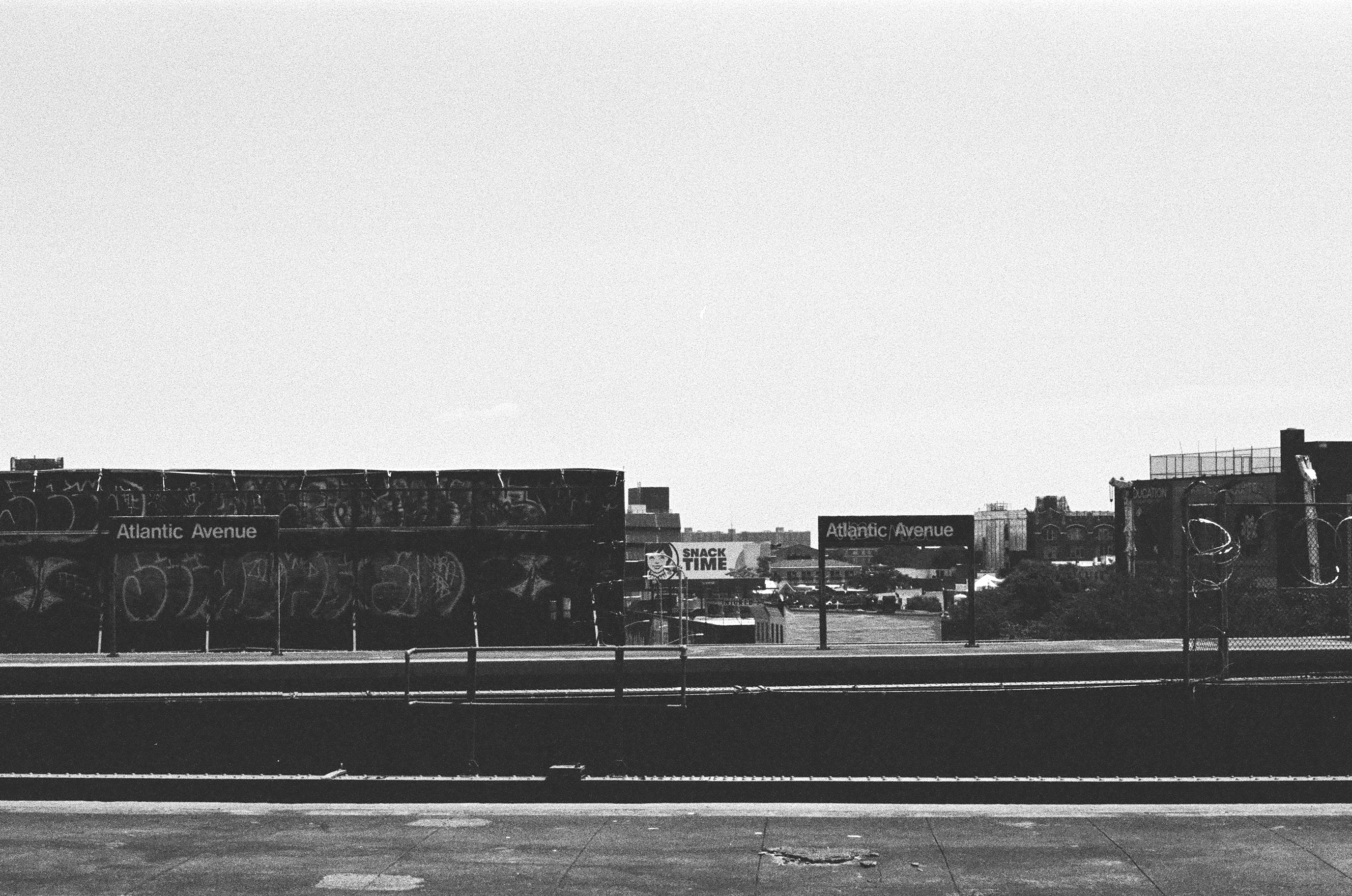
East New York is an area where the infrastructure really a story of another era. At one time, three elevated lines—the Fulton Street, Jamaica, and Canarsie lines—converged here. Trains on any of the three lines coming from eastern Brooklyn and Queens could change at East New York to any of the three routes on to Manhattan (and vice versa). Though the latter two lines remain today (the Fulton Street elevated was replaced by a subway, now the A and C lines), transit operations around East New York today are much simpler. The Atlantic Avenue station on the Canarsie line (today’s L train) has two disused platforms and four disused trackways—a legacy from when both Canarsie and Fulton Street trains used the station.
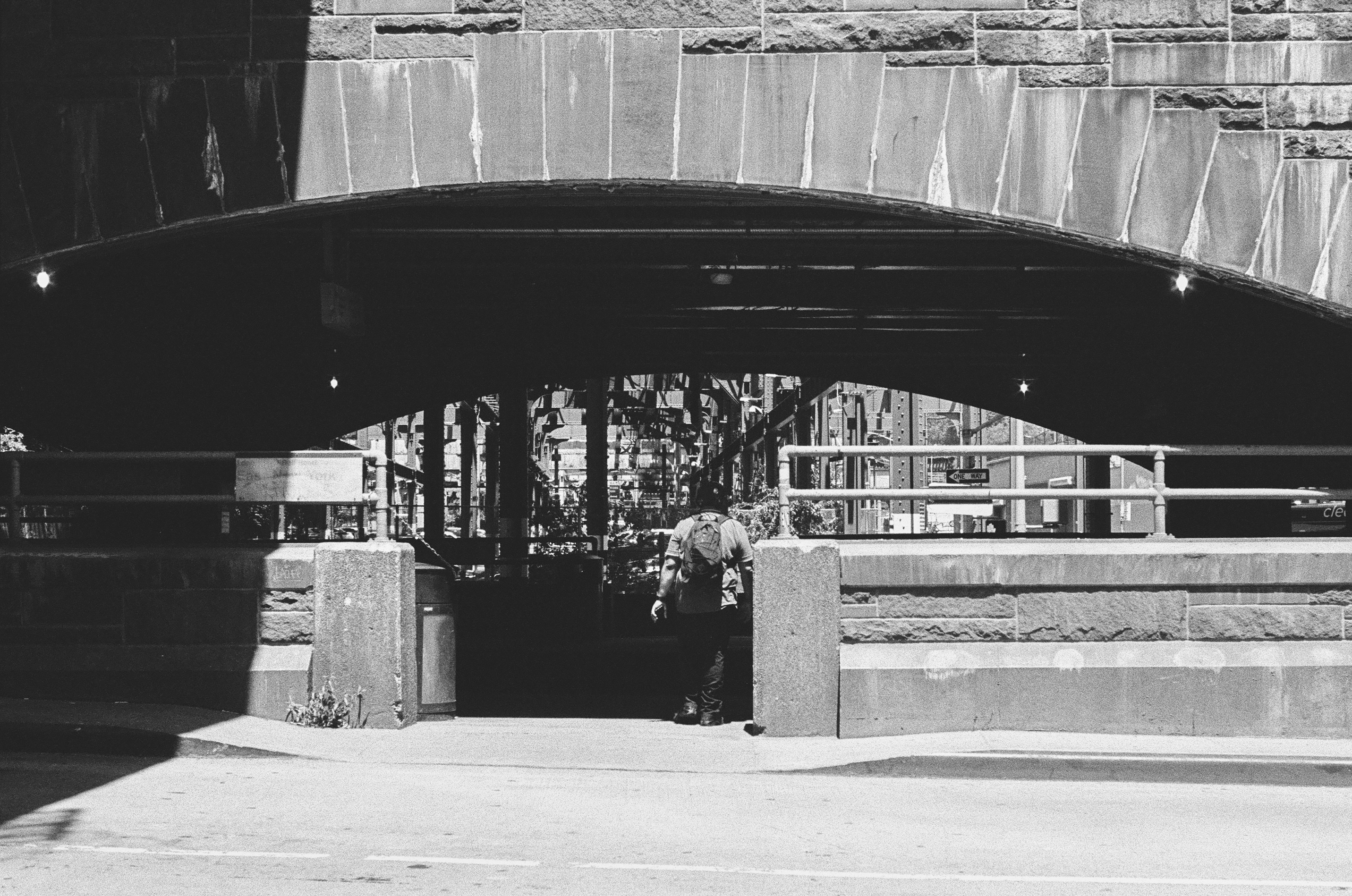
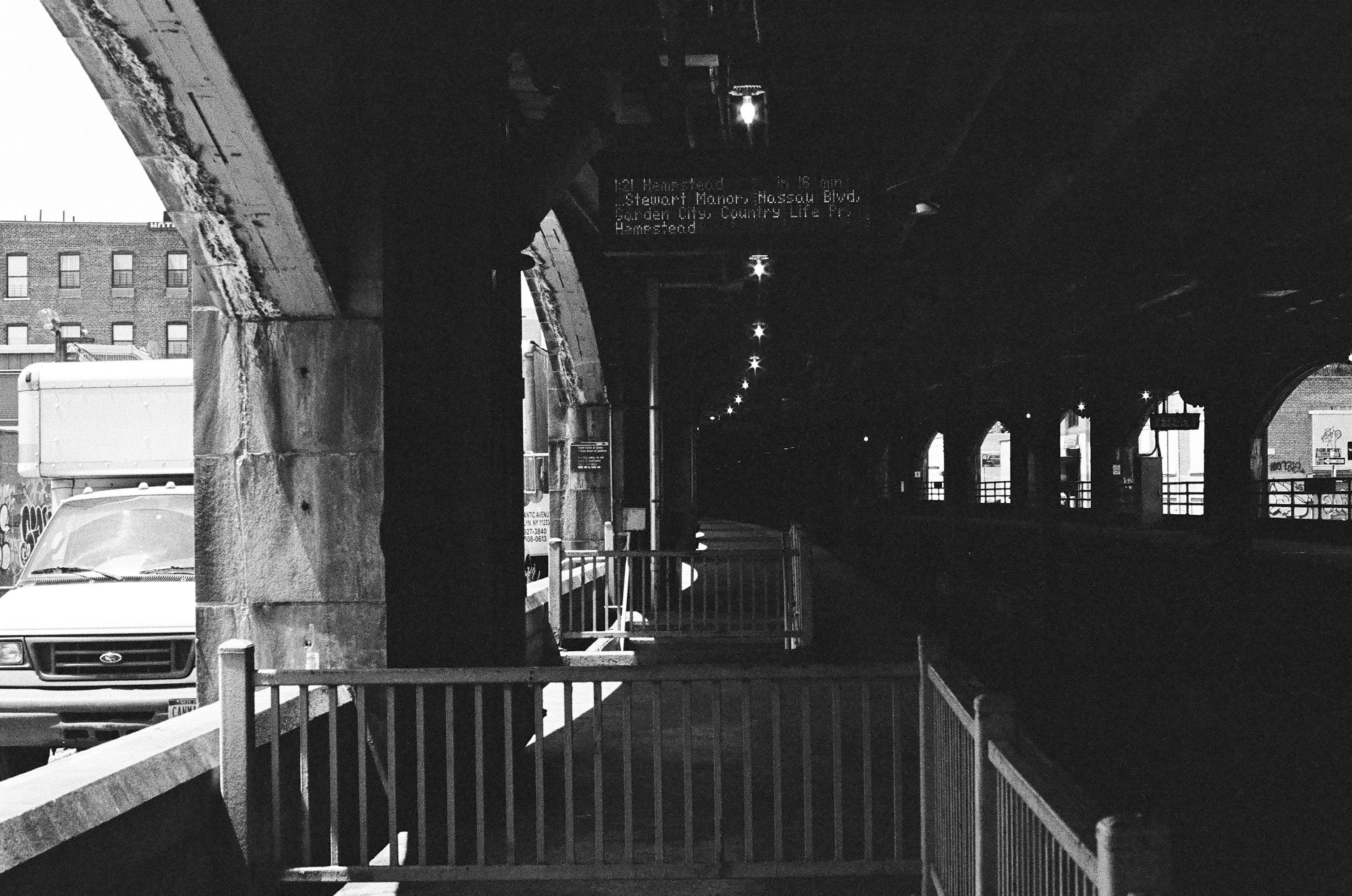
The Atlantic Avenue station offers a connection to the Atlantic Branch, which runs on a strange right-of-way through East New York: the train tracks are at grade-level, but are separated from traffic, as Atlantic Avenue runs on an overpass above the station. The entrance to the LIRR’s East New York station is not the most well-advertised—you enter through one of the archways of the Atlantic Avenue overpass on to the platforms.
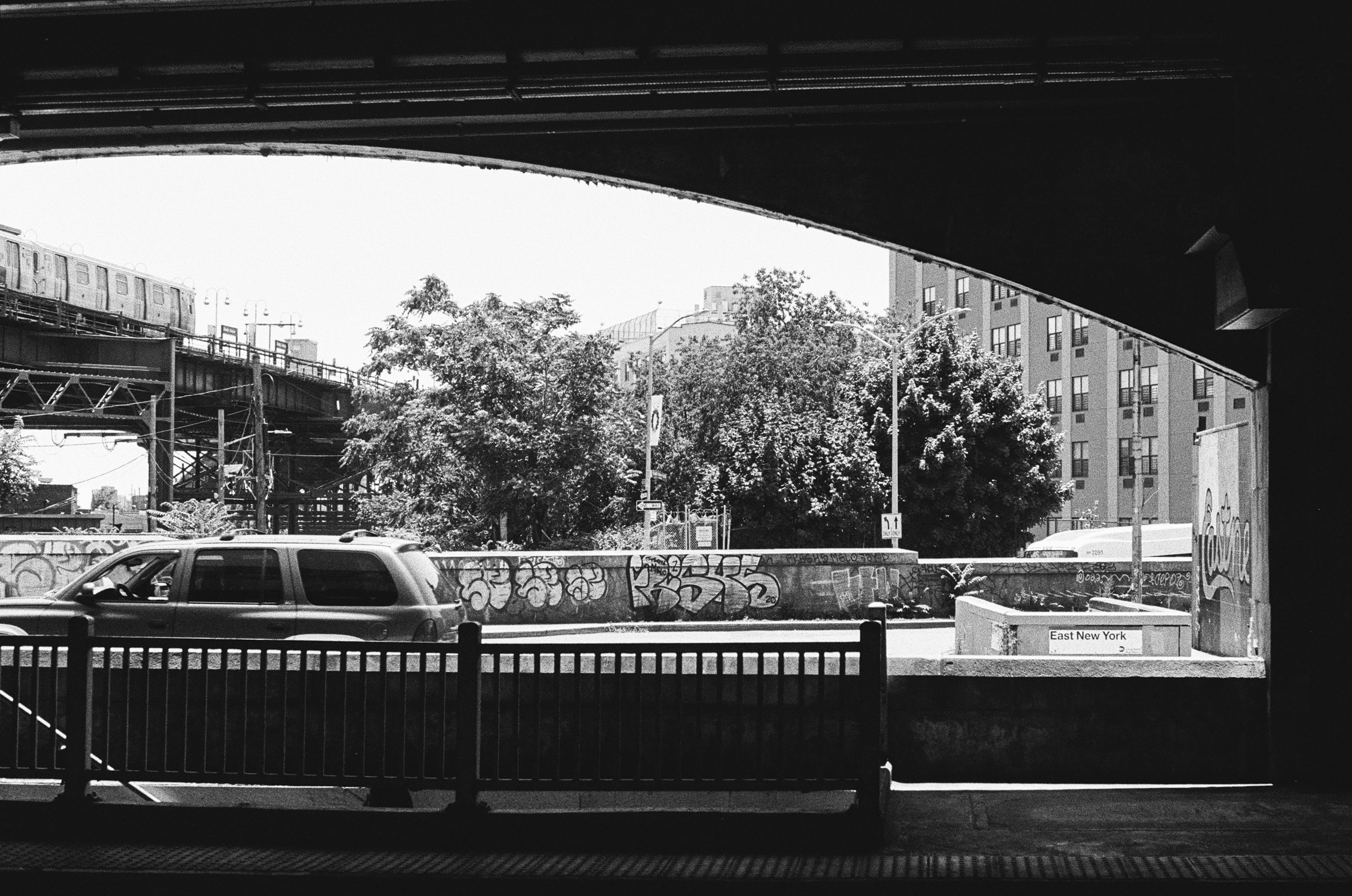
There are also two subway-style underpass entrances to the station, saving passengers from crossing often-fast-moving traffic adjacent to the station, which are also very low-key. This is such entrance viewed from the LIRR platform, with an L train passing above, headed for Canarsie.
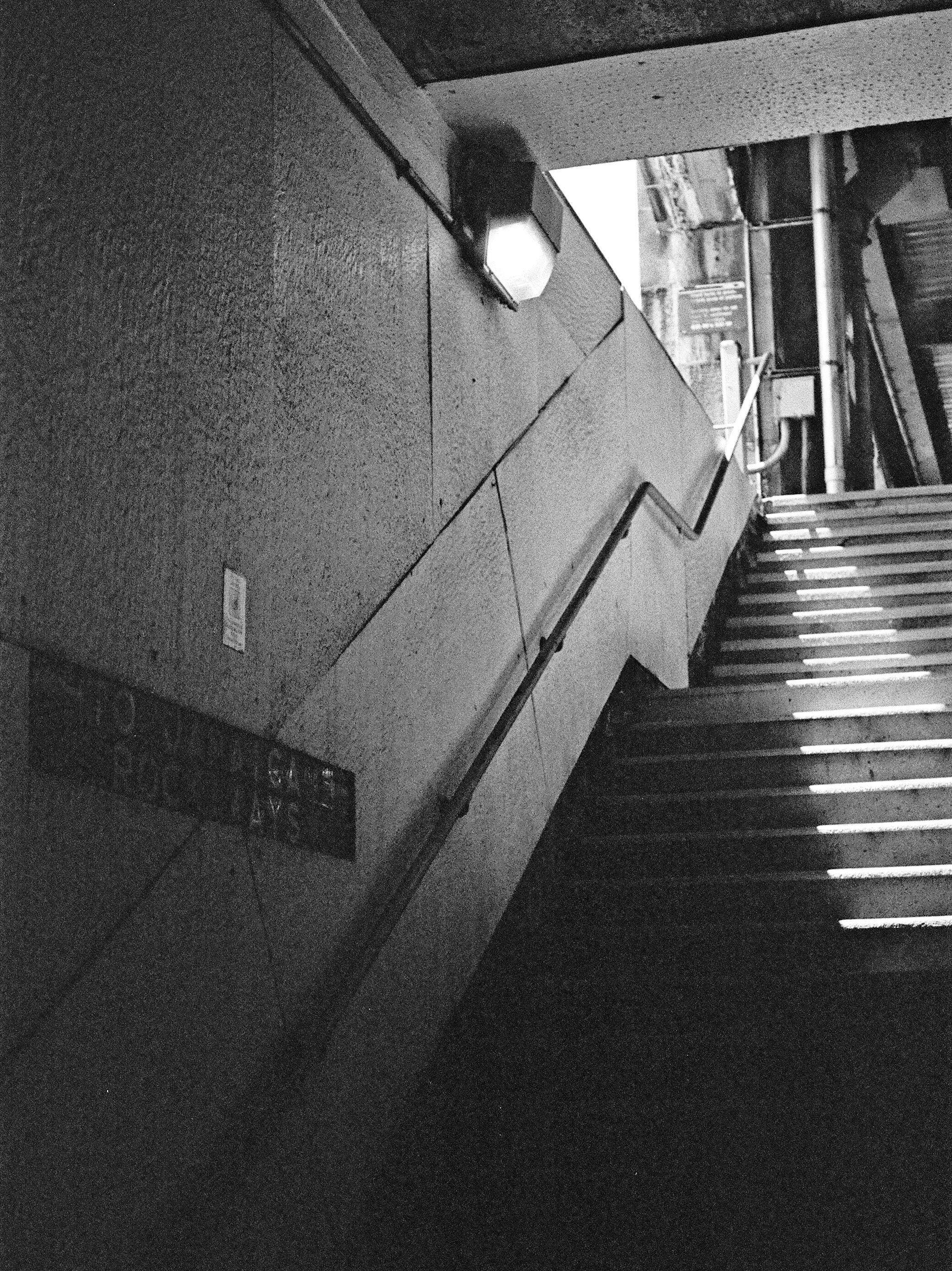
Because the railroad tracks are at grade-level, the station underpasses are also the only way for pedestrians to cross the tracks (and Atlantic Avenue) in this area. The underpass entrances lead to either platform, and contain old mosaic signs in a similar style to subway stations built by the city-run Independent Subway (IND). The sign pointing to the eastbound platform reads “to Jamaica and the Rockaways:” LIRR trains, of course, once ran on what is now the A subway line to the Rockaways.
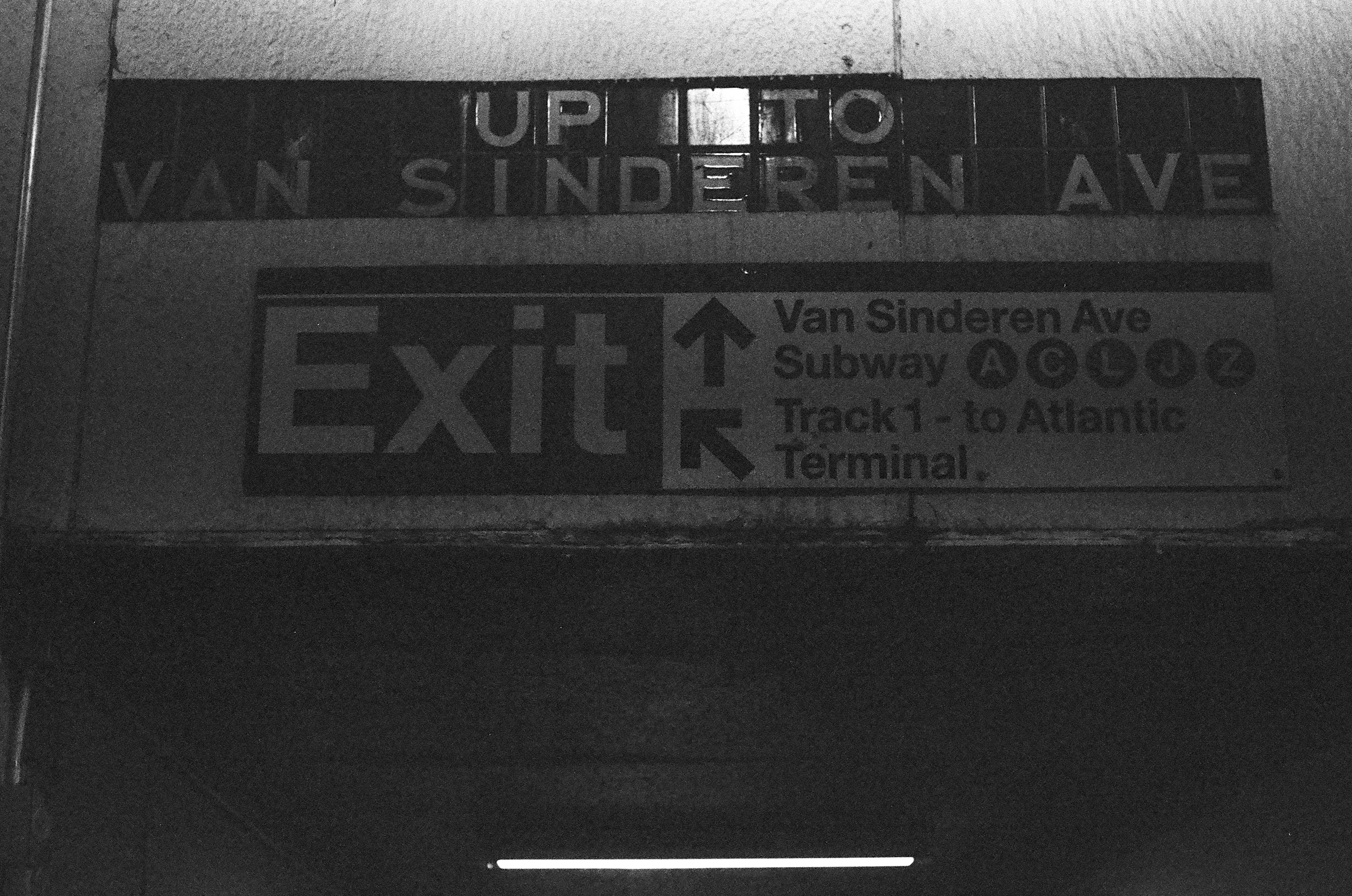
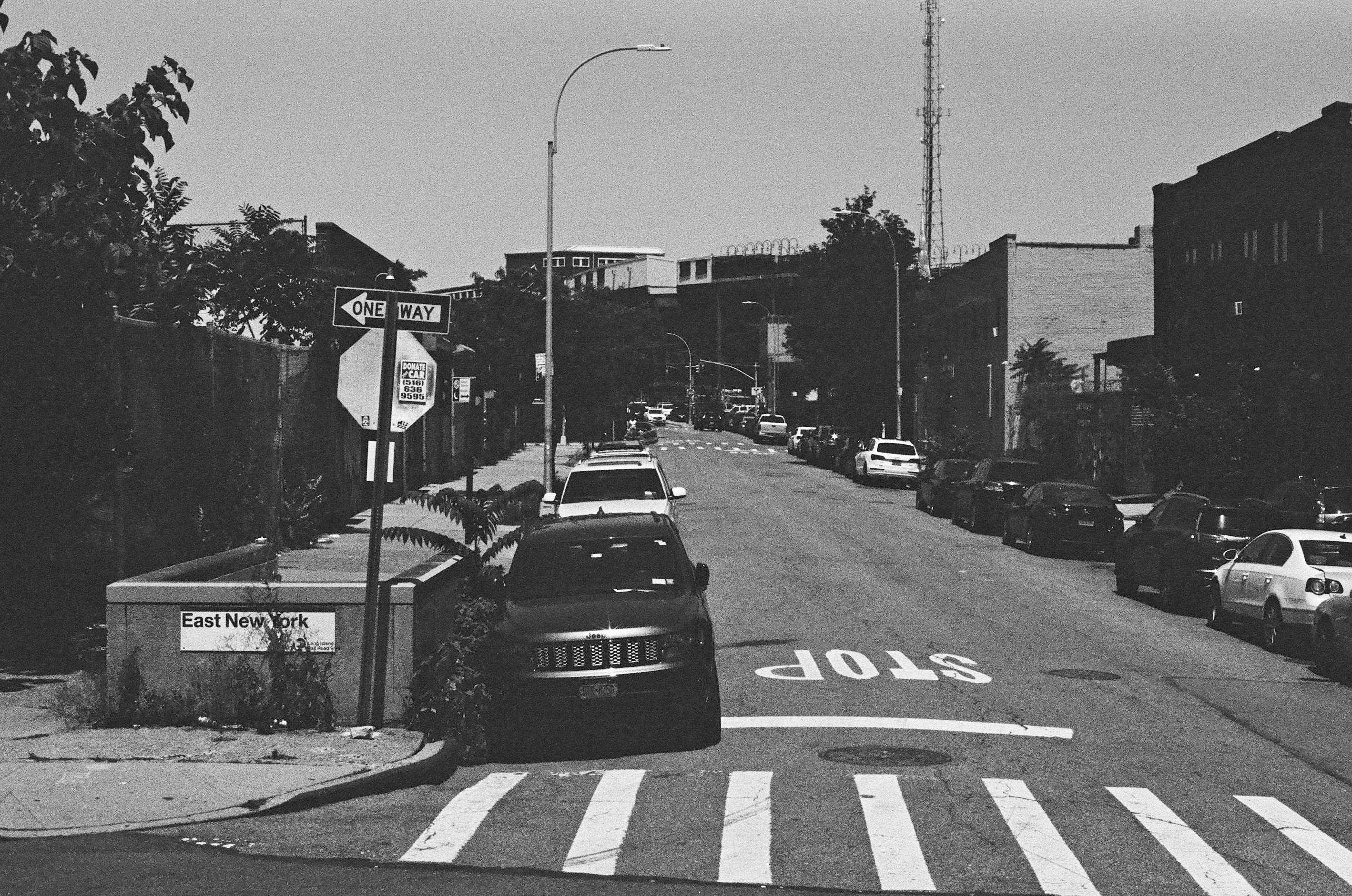
This is the other subway-style underpass entrance, on Van Sinderen Avenue. The elevated structure at Broadway Junction is in the background; the two stations are only about two blocks apart.
This photo definitely exaggerates it but, thanks to its unique construction under the Atlantic Avenue roadway, the East New York LIRR station is far from the most well-lit transit station in the city.
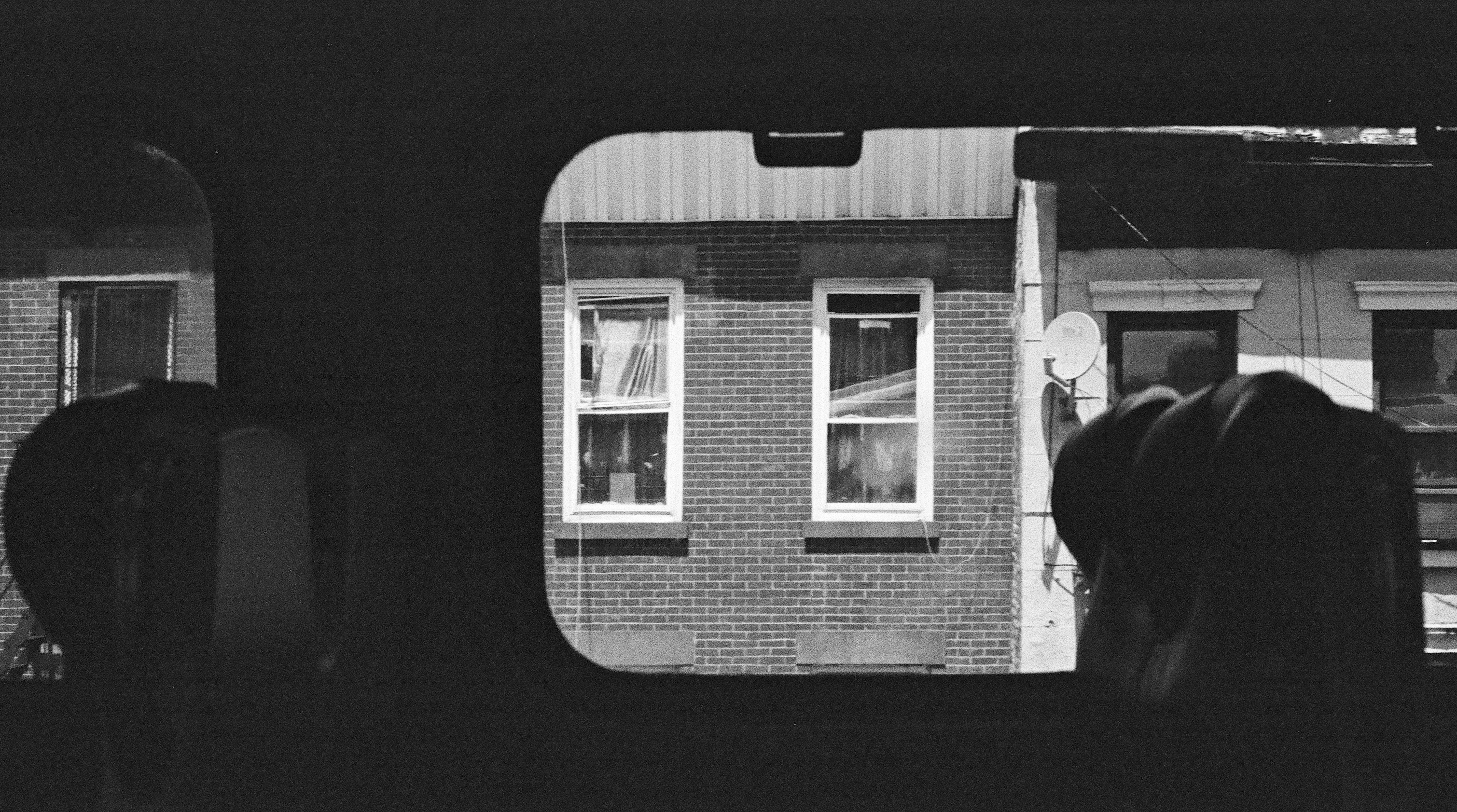
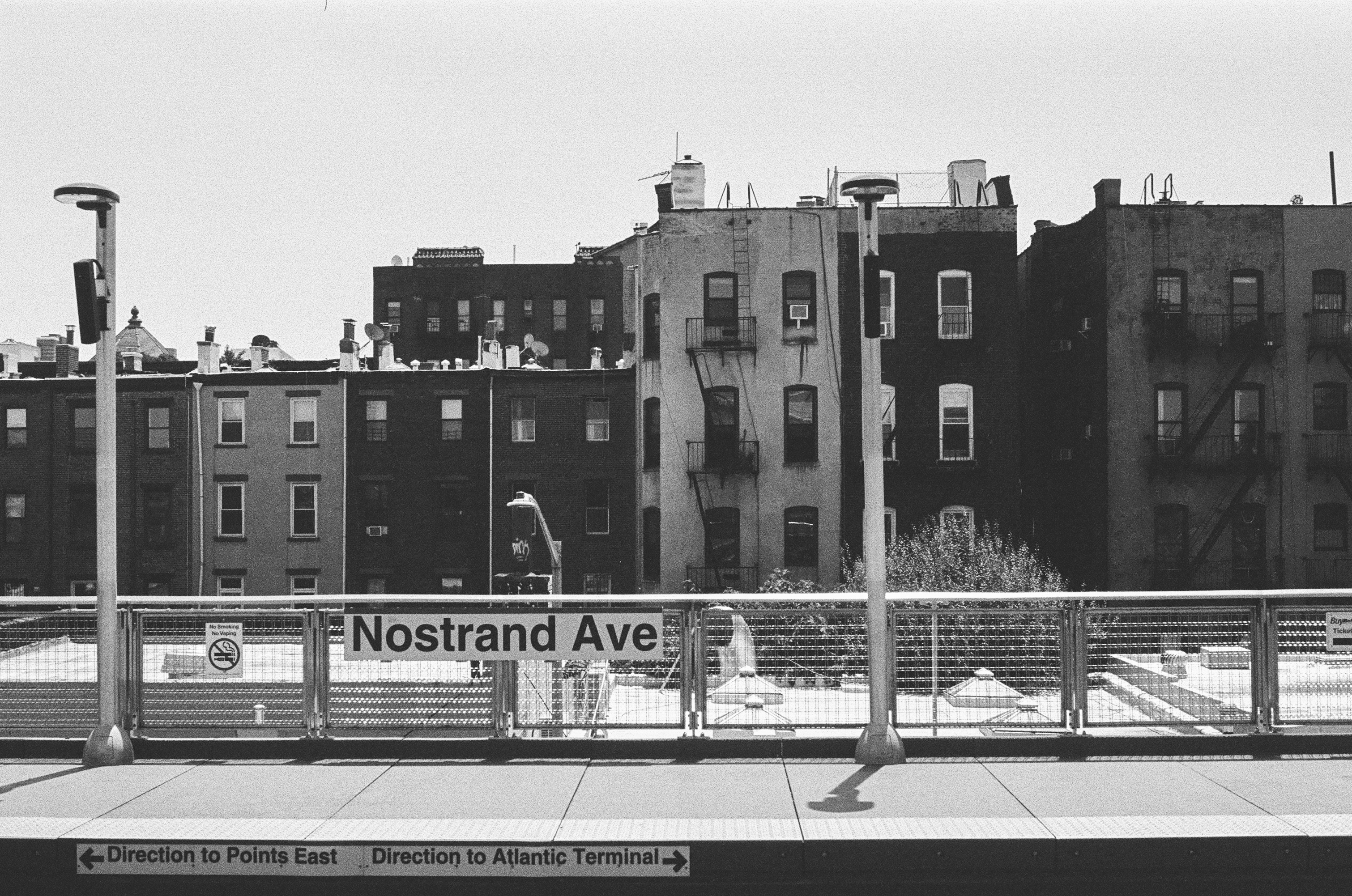
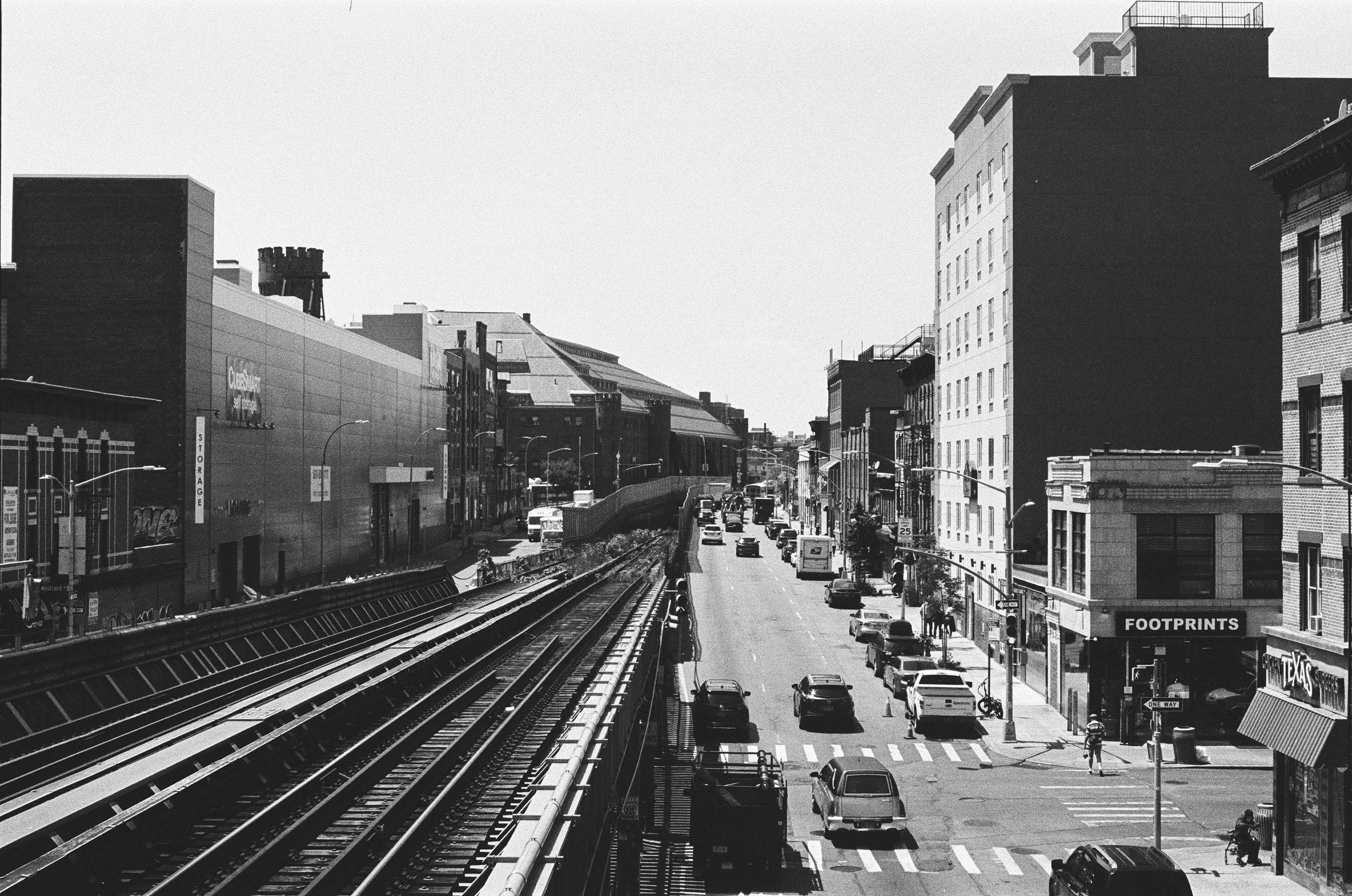
Heading west from East New York, the next station is Nostrand Avenue in Bedford-Stuyvesant. Before this station, the line rises on to a viaduct that is very similar to NYC’s elevated subway lines. It’s fairly unique in New York City to be on a commuter rail train running so close to urban housing—this section of the line is very reminiscent of elevated subway lines (the M through Bushwick and Ridgewood comes to mind specifically, as that also runs very close to its neighbors’ windows).
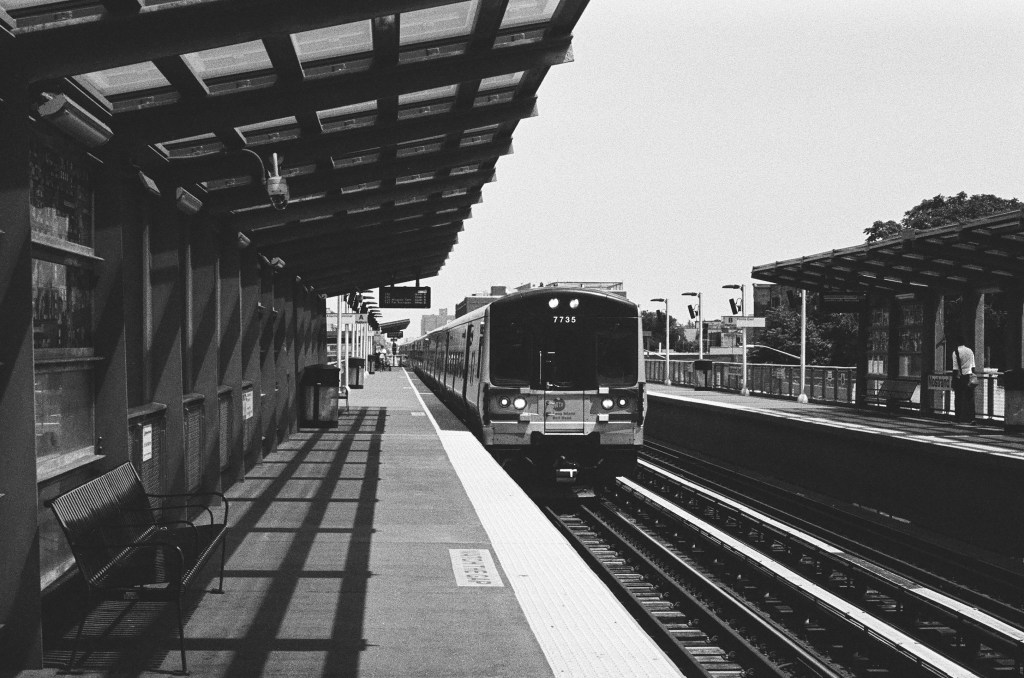
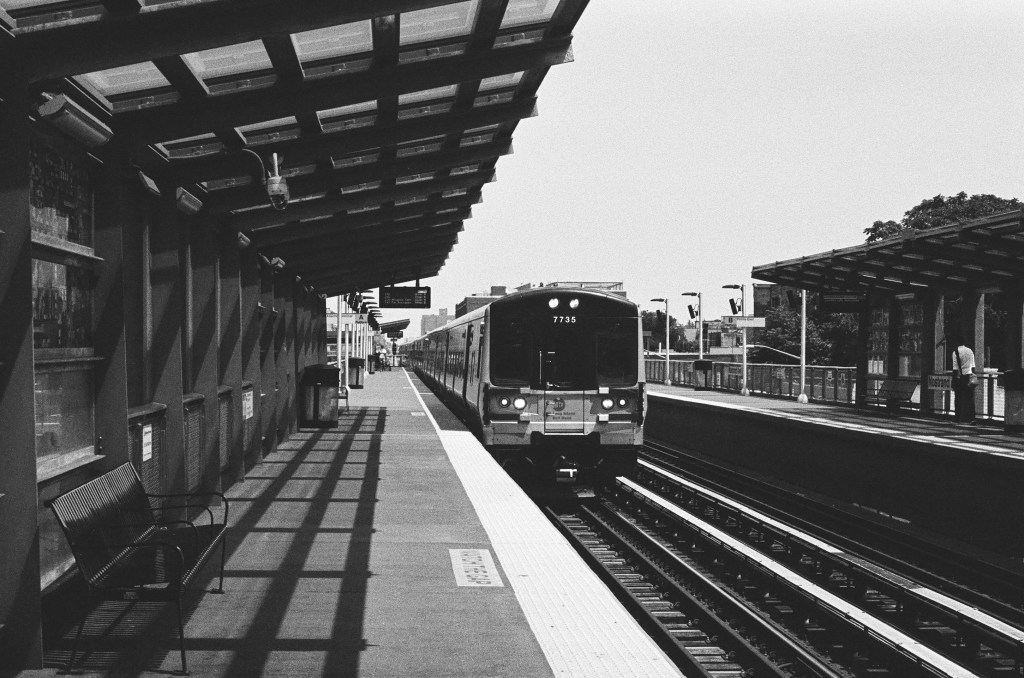
The Nostrand Avenue station really just feels like any other elevated subway station. It’s just missing a subway station’s frequent service!
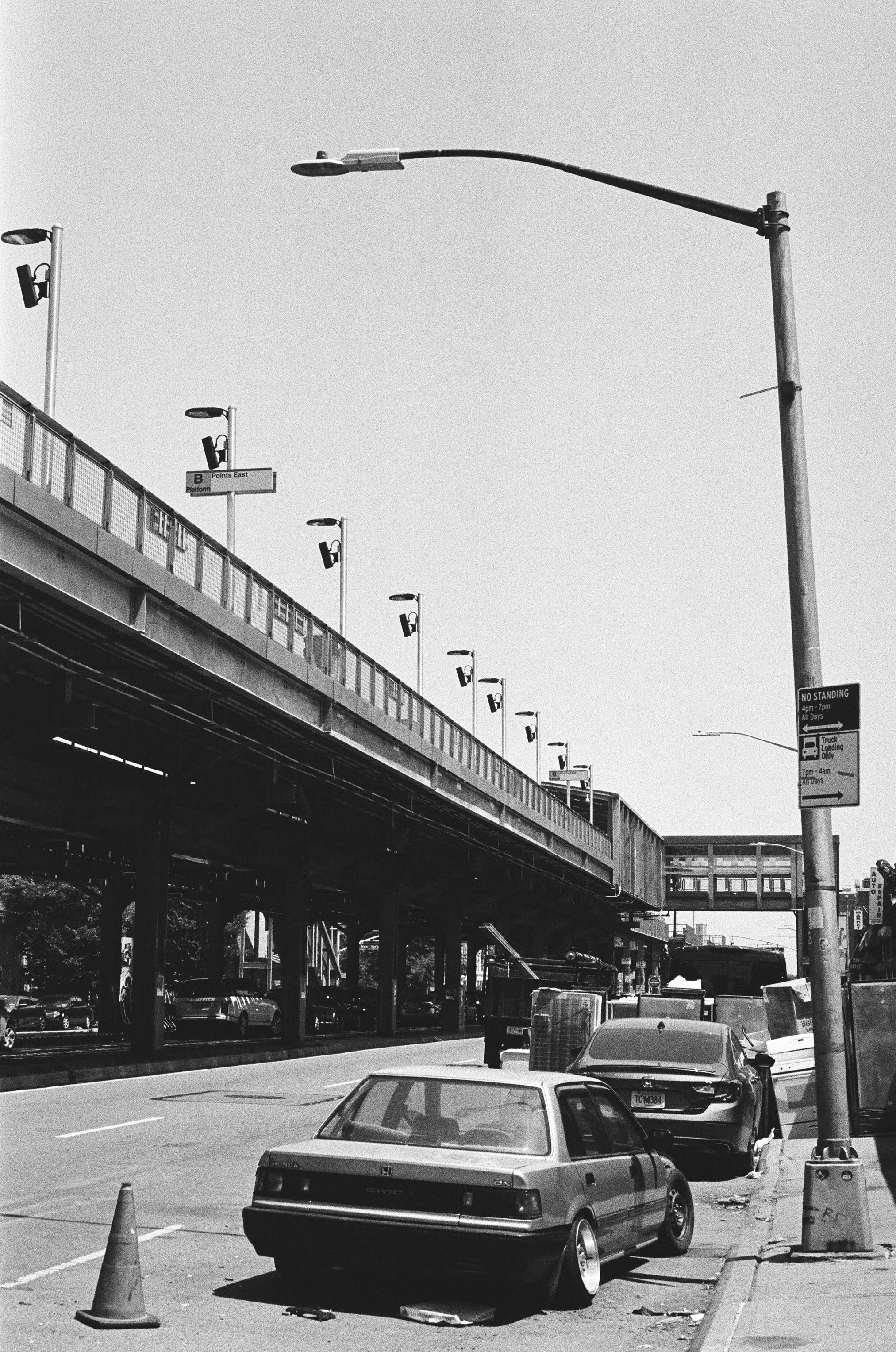
The land use around the Nostrand station is not ideal, though. Despite its close proximity to residential density and busy commercial corridors on Fulton Street and Nostrand Avenue, Atlantic Avenue is mostly auto repair shops, so there are a lot of broken-down—or just straight-up broken—cars sitting by the curb. The lack of pedestrians leads to a classic chicken-egg problem of arterial roadways: without pedestrians, Atlantic is treated as a de facto highway, making it even more hostile to pedestrians, and discouraging the growth of any pedestrian traffic that might help make traffic calmer.
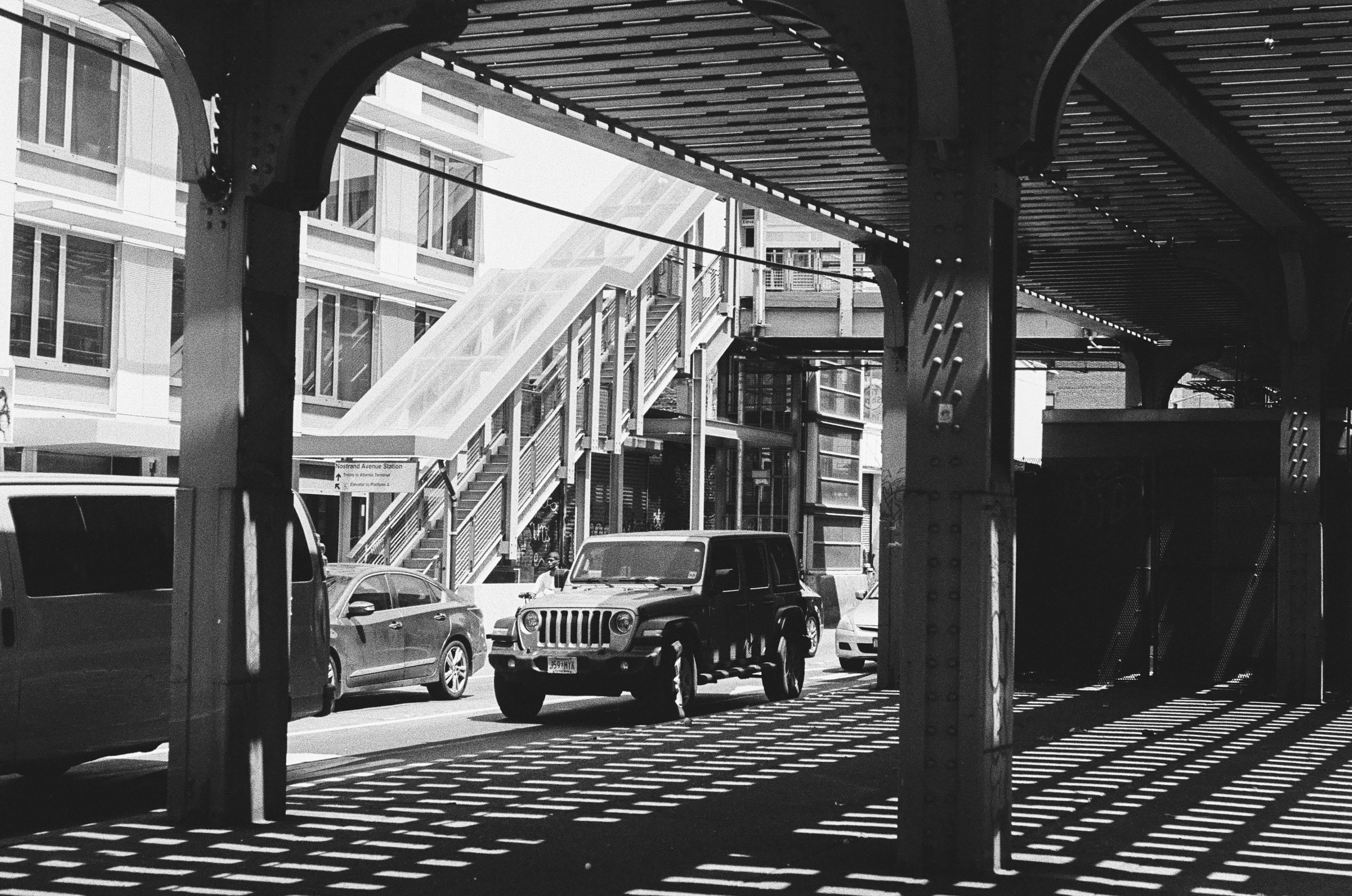
In addition, the vast spaces underneath the viaduct are left almost entirely unused. However, the station was extensively rebuilt recently, and its entrances are in far better shape than those at East New York.
It is worth noting that it does not have to be this way! Many other cities also have elevated rail viaducts, and some of those cities have taken advantage of the space underneath them to enhance the public realm. Even if the space under the viaduct is unused, other cities also demonstrate how roadways around viaducts can easily be more friendly to pedestrians.
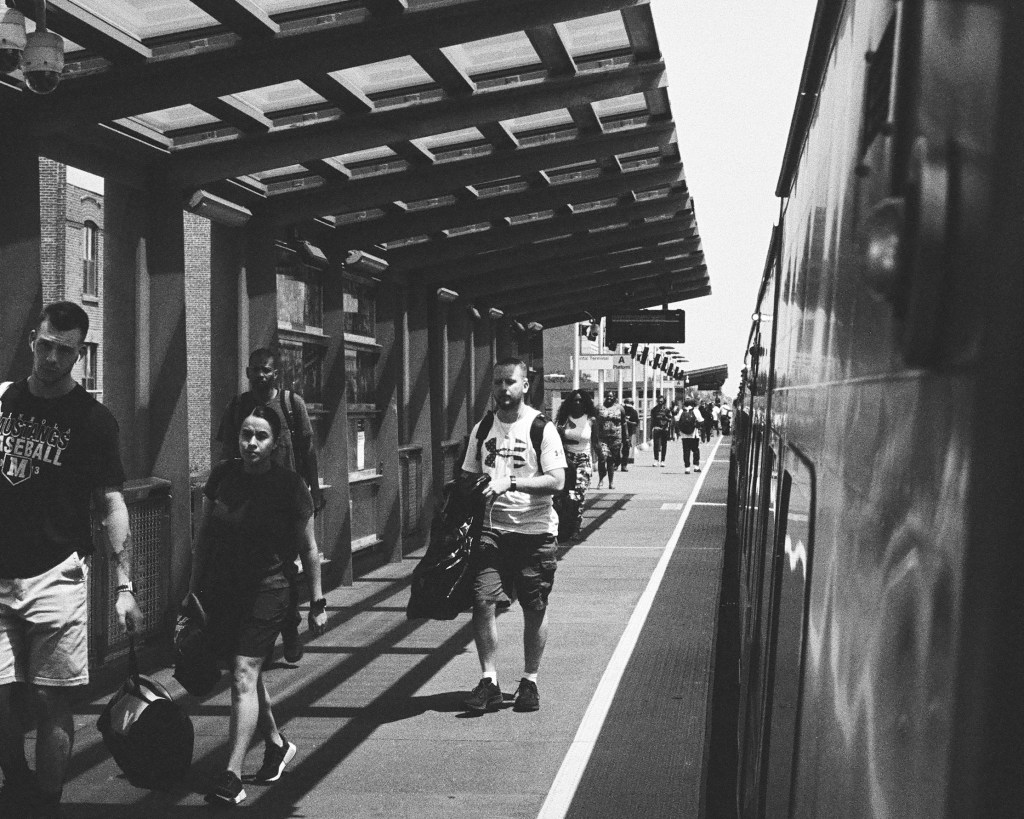
Land use and streetscape aside, the Nostrand Avenue station definitely gets used. The crowd coming off a midday train from Long Island wasn’t tiny.
Continuing west from Nostrand Avenue, the Atlantic Branch goes back underground for its last mile and a half to Downtown Brooklyn.
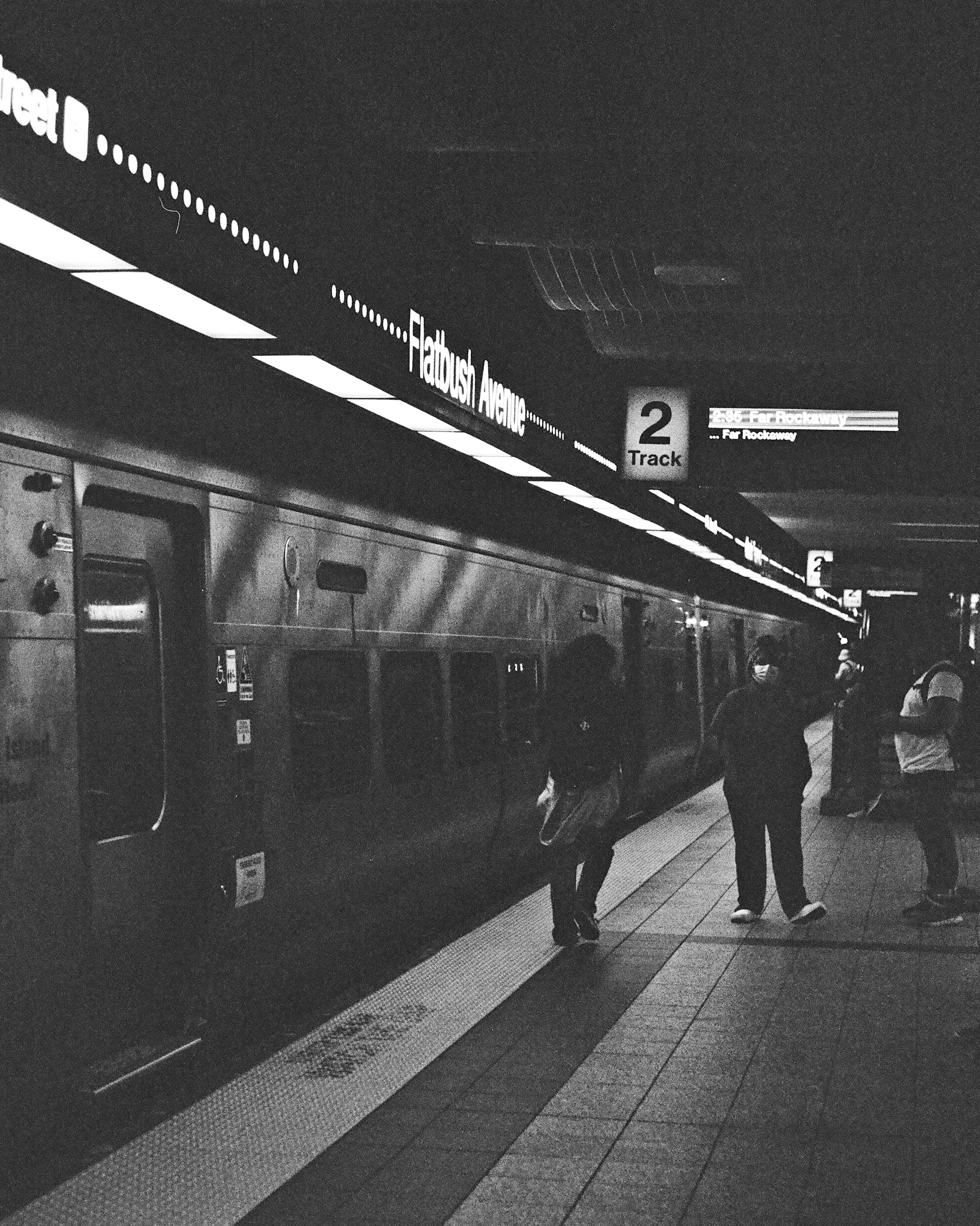
Atlantic Terminal (formerly Flatbush Avenue) is where the branch comes to an unceremonious end, just shy of reaching Manhattan. It is one of a few Long Island Rail Road terminals which remain as monuments to a time before trains could cross the East River, though the Atlantic Terminal stop sees much more use than its brethren upriver in Long Island City.
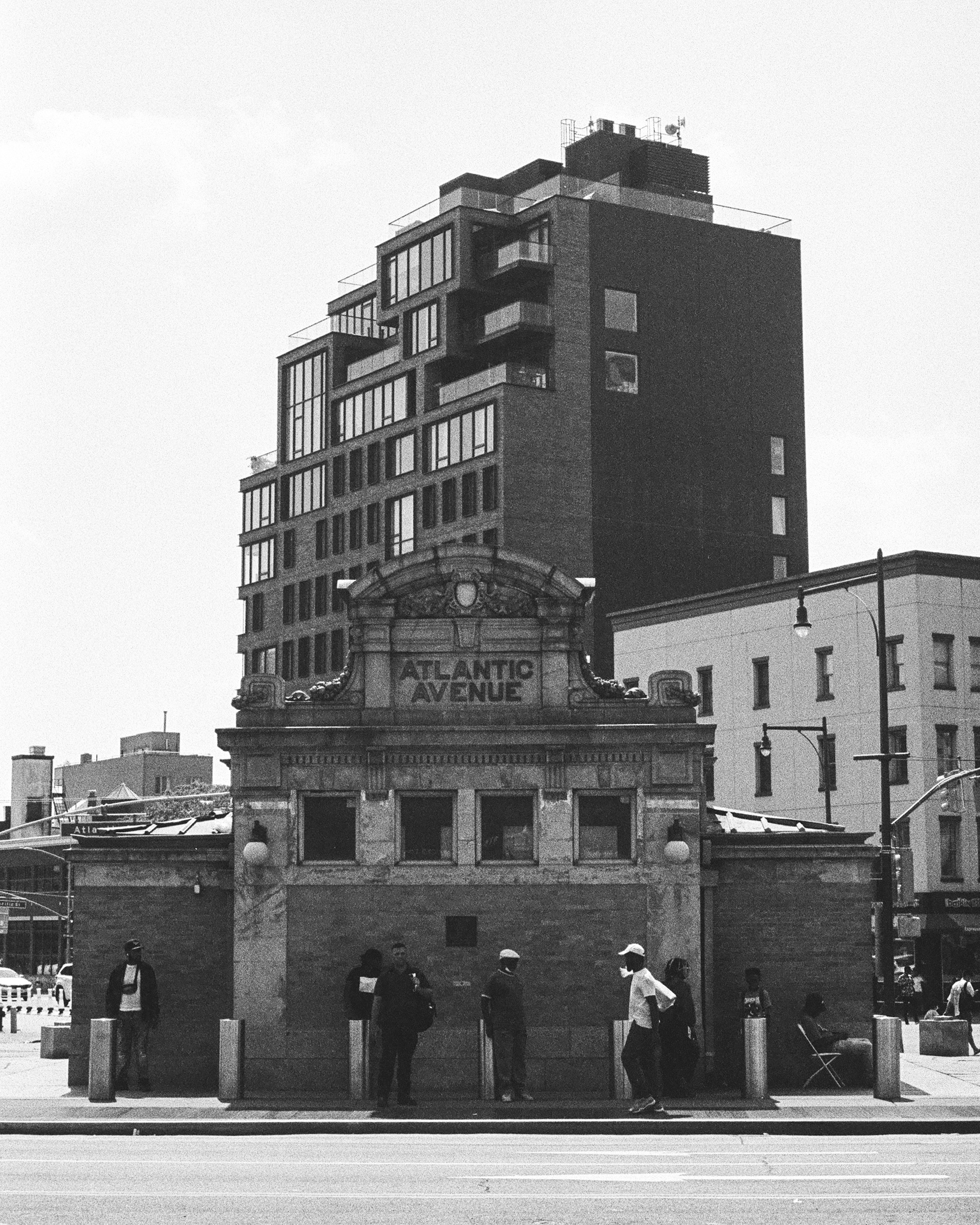
It’s a fairly unremarkable station itself—though it was renovated relatively recently—and it is connected to the massive Atlantic Avenue/Pacific Street/Barclays Center subway hub, which retains an original 1908-built entrance designed by the Interborough Rapid Transit company (IRT).
This concludes this look at some of the LIRR’s Atlantic Branch. Its nature—a rapid transit-esque line, but without frequent service; a line which services busy neighborhoods, but ends short of the city center—makes it a frequent subject of discussion among New York-area transit advocates’, who often envision the line extended to Manhattan (or further to New Jersey) and hosting frequent, subway-like service.
To some extent, the MTA has acknowledged the need to bring the Atlantic Branch into the fold of transit in New York City. One of the barriers to high ridership, besides infrequent services, is the high cost of commuter rail fares. In 2018, the MTA began offering a special Atlantic Ticket, which halved peak-time fares on Atlantic Branch trains, and became quickly popular. It is more proof, if proof were needed, that when public transit is made easier-to-use, it will be used. With further improvements to affordability, service, and stations, the Atlantic Branch could easily become a critical transportation artery for Brooklyn & Queens. The infrastructure is there and waiting.
Few New York City neighborhoods have seen a recent explosion of development on the scale of Long Island City’s waterfront. An industrial area throughout the 20th century, Long Island City has undergone a recent transformation into a hub of residential development, spurred by its close proximity to Manhattan and numerous inter-borough subway connections.
There are few artifacts of the neighborhood’s history still standing. One such artifact is the Long Island City station of the Long Island Rail Road, which is probably New York City’s most-hidden and certainly one of New York City’s least-used railroad stations.
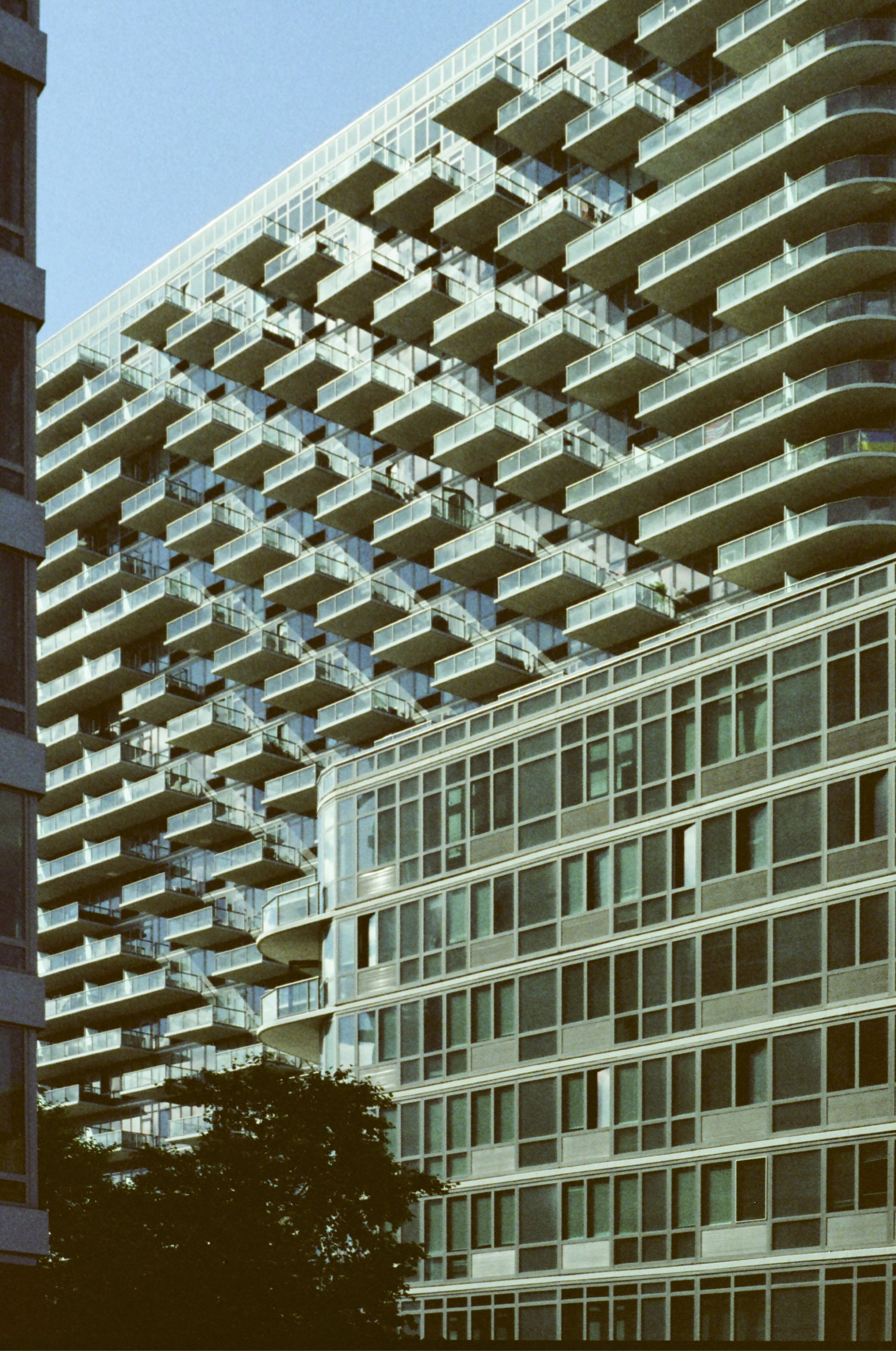
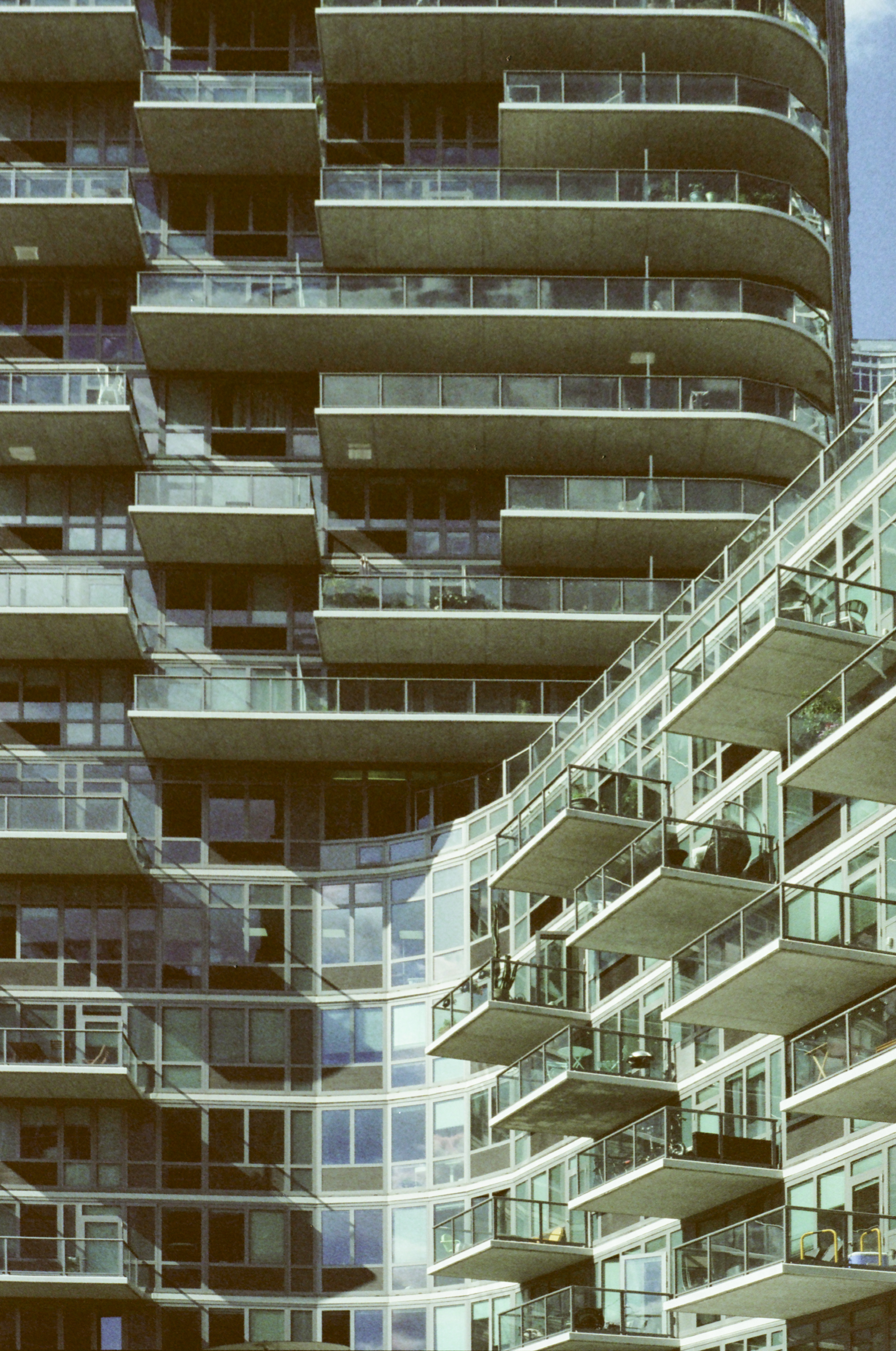
Along Center Boulevard, the closest street to the waterfront, new construction has brought density at a nearly-dazzling scale to Long Island City.
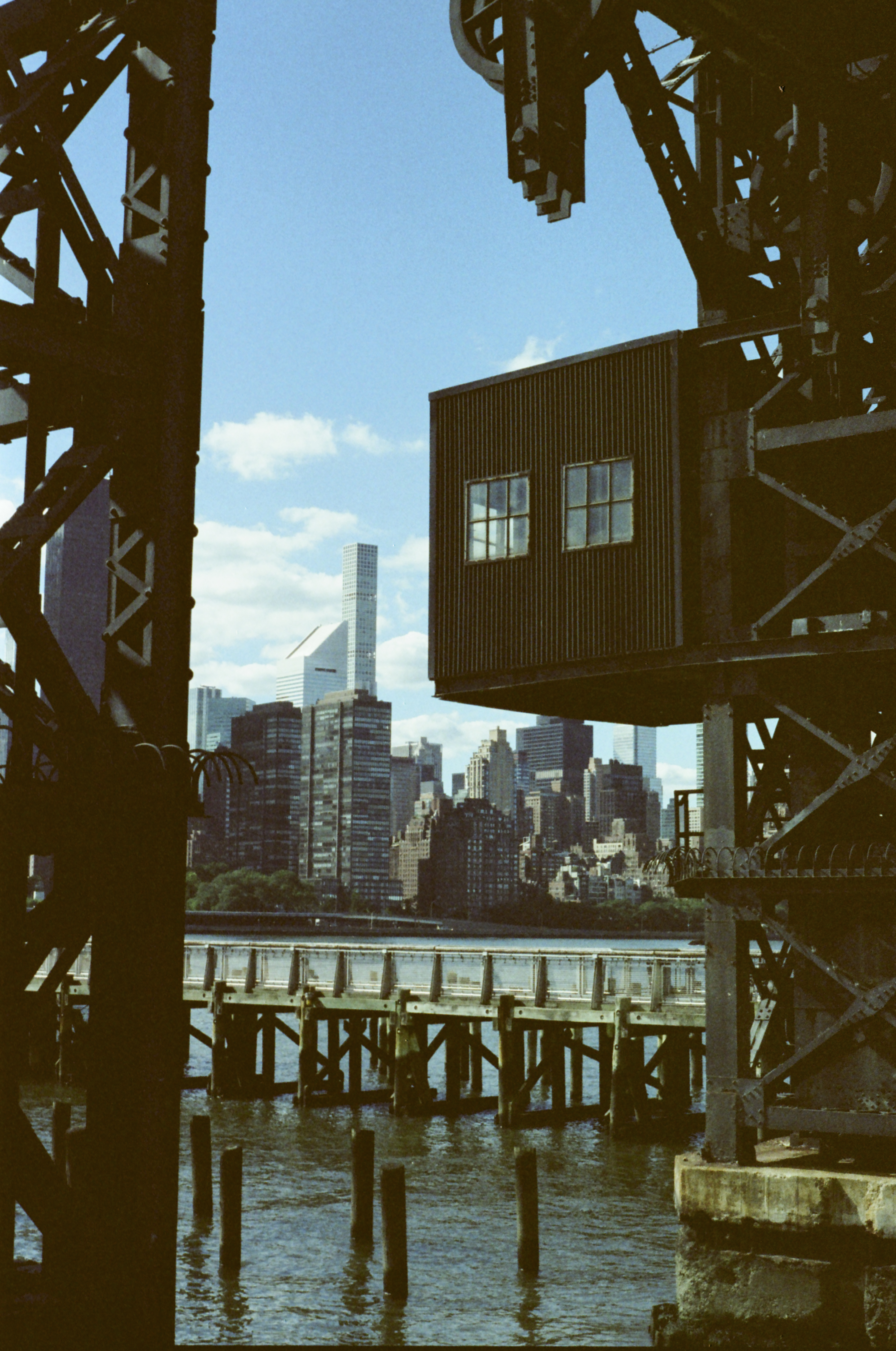
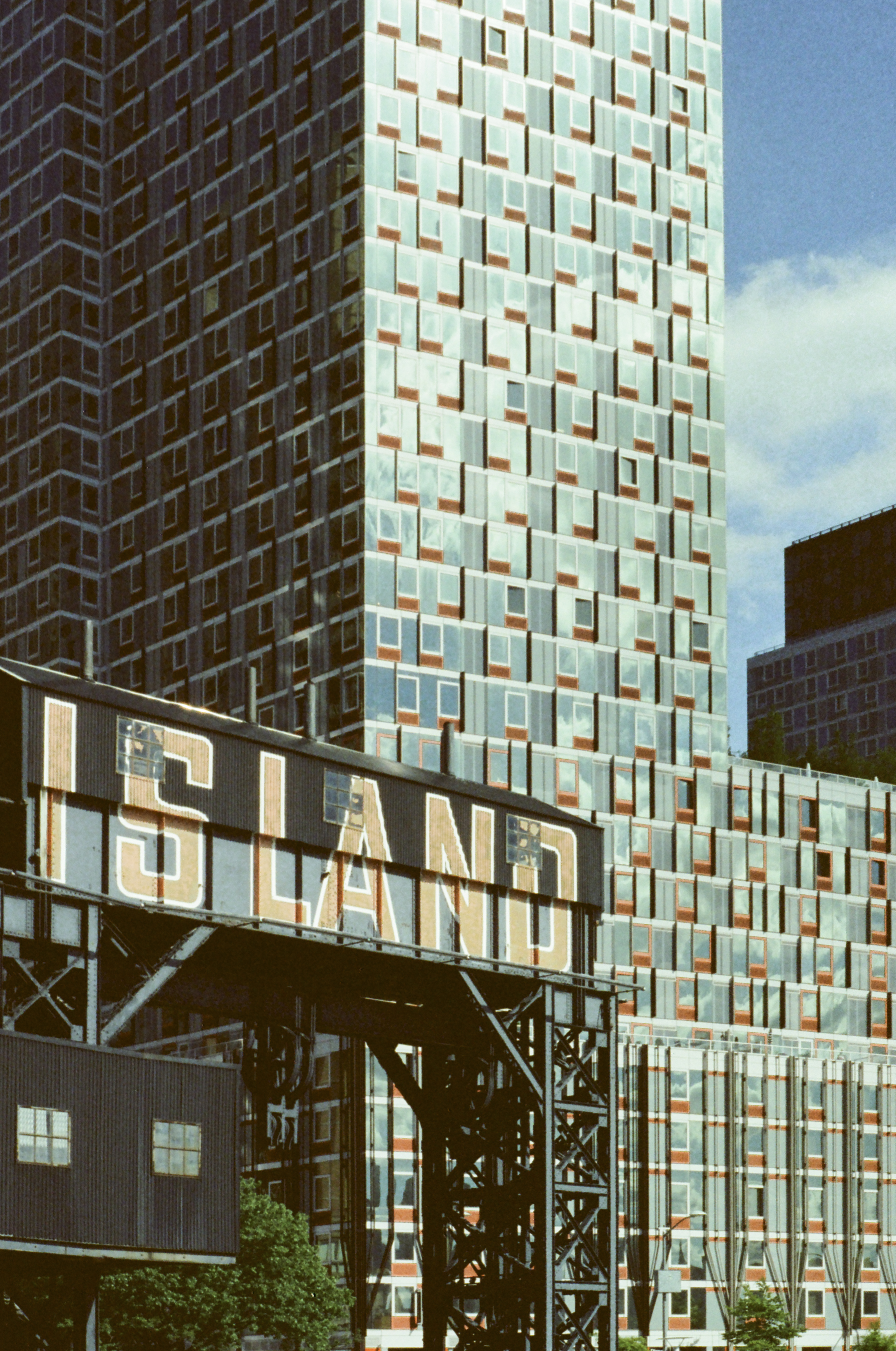
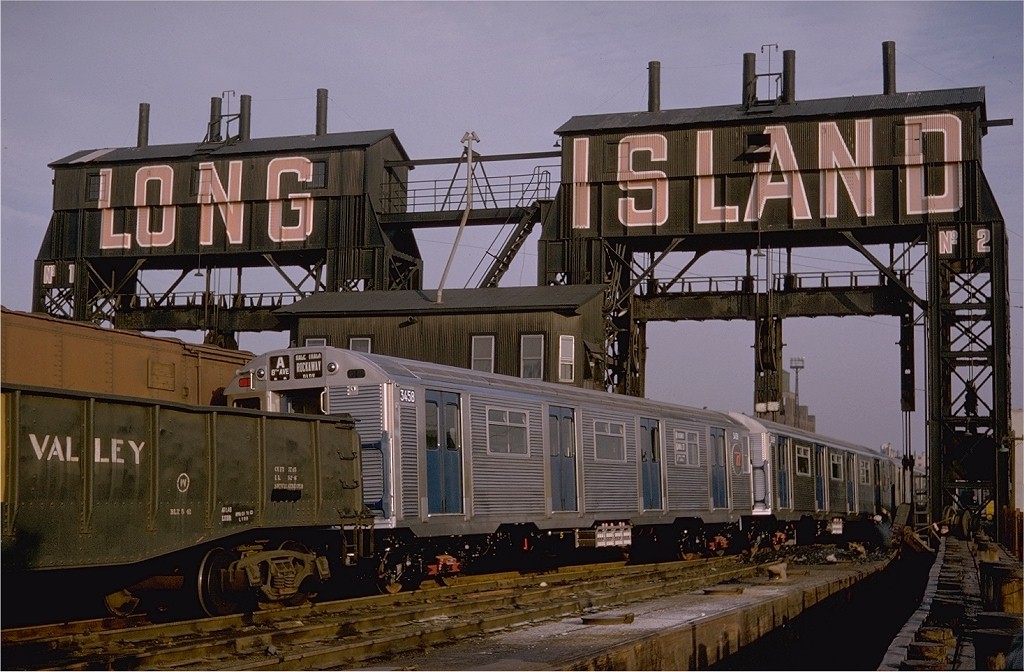
Long Island City still retains a few relics of its more-industrial history, most notably the two gantries labeled “Long Island,” which give Gantry Plaza State Park its name. These gantries controlled the Long Island Rail Road’s car float operation, which transferred freight cars carried on East River barges to railroad tracks for the remainder of their journey across New York City or to Long Island.
Some of the first shiny, new R32 subway cars were delivered to New York City by Long Island Rail Road car float in 1964. These would have been some of the final deliveries made by car float, as the gantries, and the rail line which led to them, was disused by the 1970s. (Below image credit: Gerald H. Landau, via nycsubway.org, link)
Only a few sections of track remain in Gantry Plaza State Park, which opened in 1998, that give any hint that the waterfront was once the end of a railroad line. The North Shore Freight Branch ran alongside the waterfront before joining the main line of the Long Island Rail Road.
Before tunnels under the East River were opened in 1910, Long Island City was the westernmost reach of the Long Island Rail Road, and passengers transferred to ferries for access to Manhattan. Since the opening of the tunnels and the end of ferry service in 1925, the station, left without a purpose and which now gets very little use, has sat as a monument to an era of very different travel patterns.
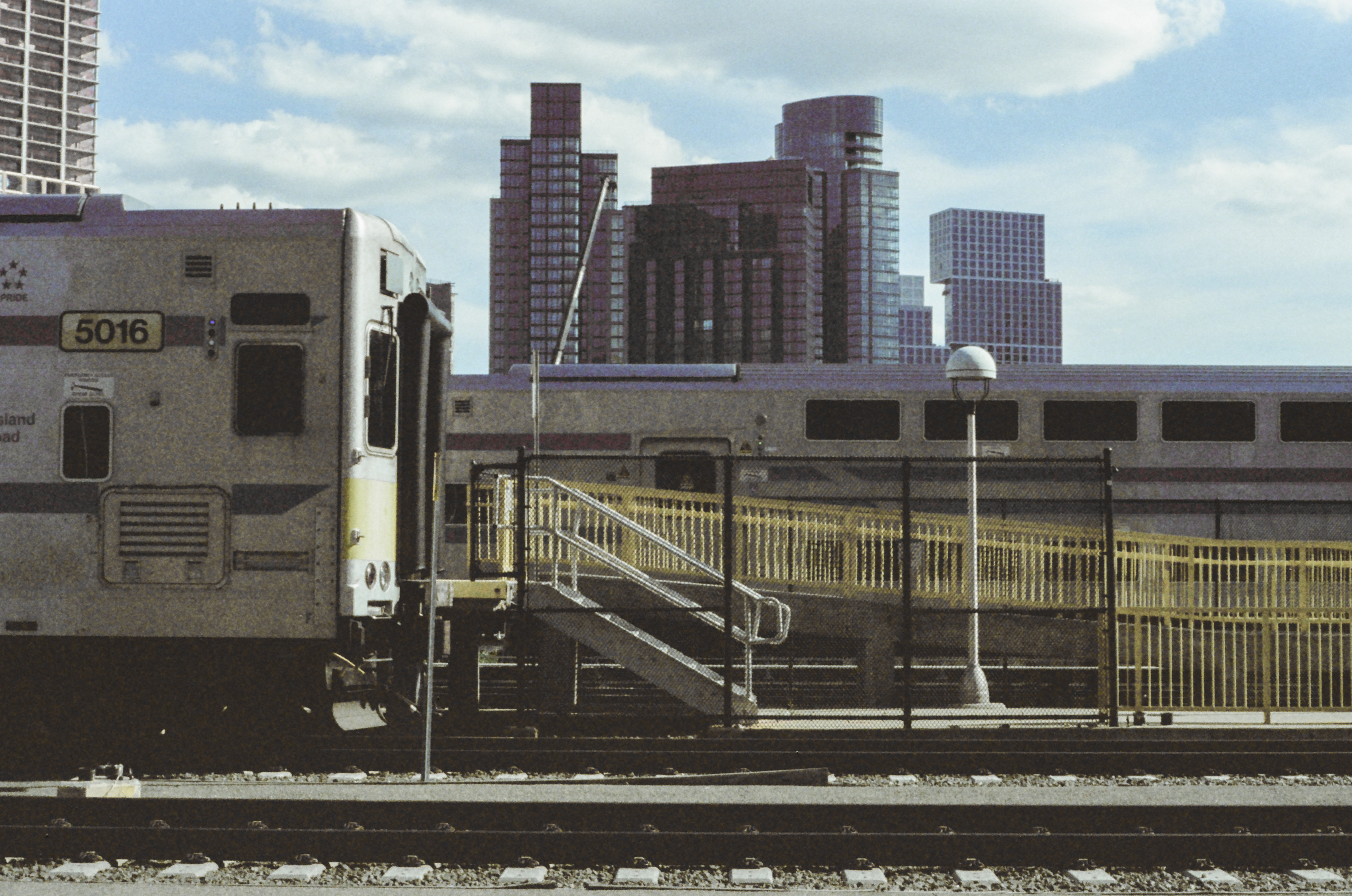
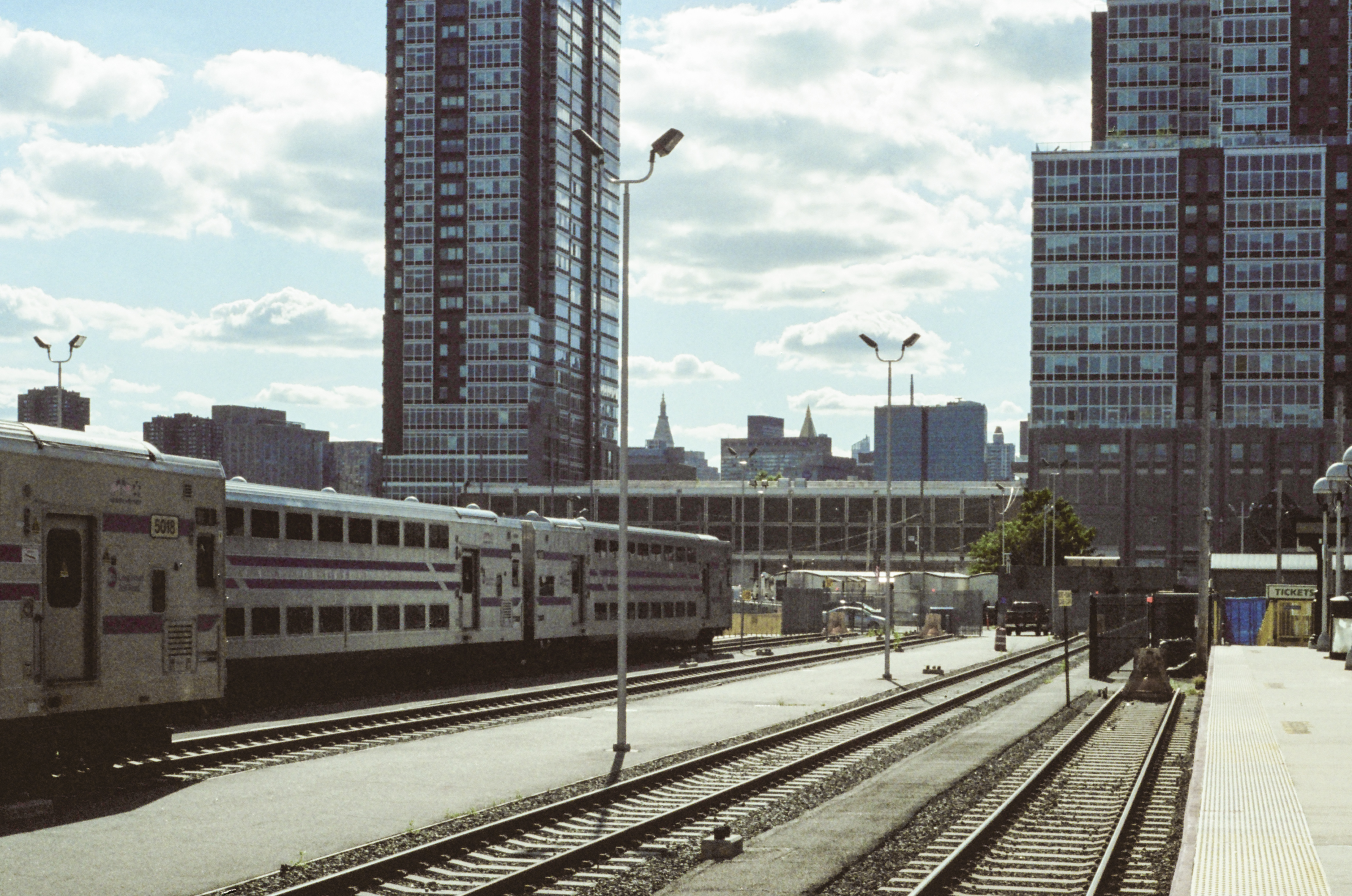
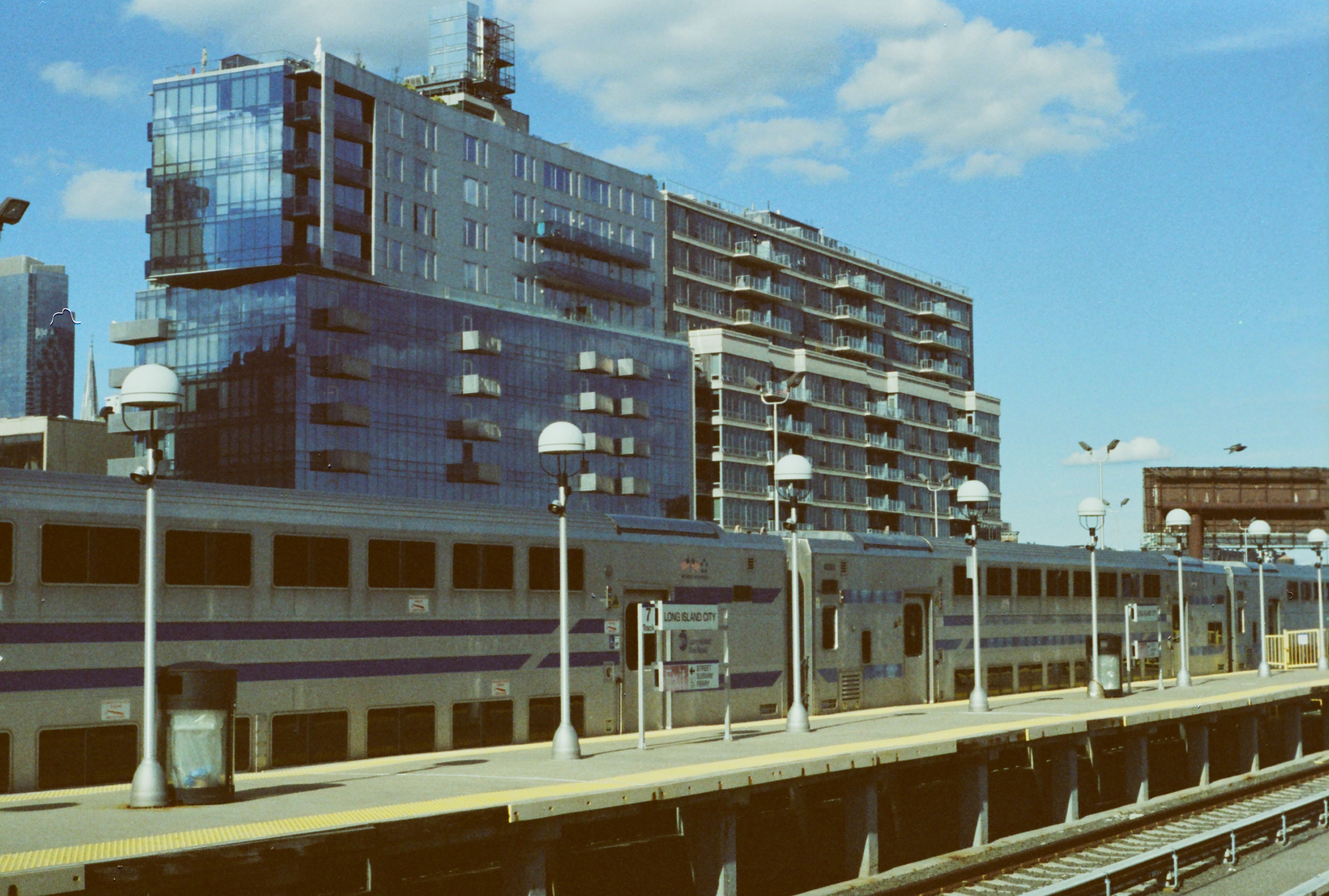
The modern, and growing, skyline of residential towers on the Long Island City waterfront provide a stark contrast to the sleepy train yard and station which sit in their shadow.
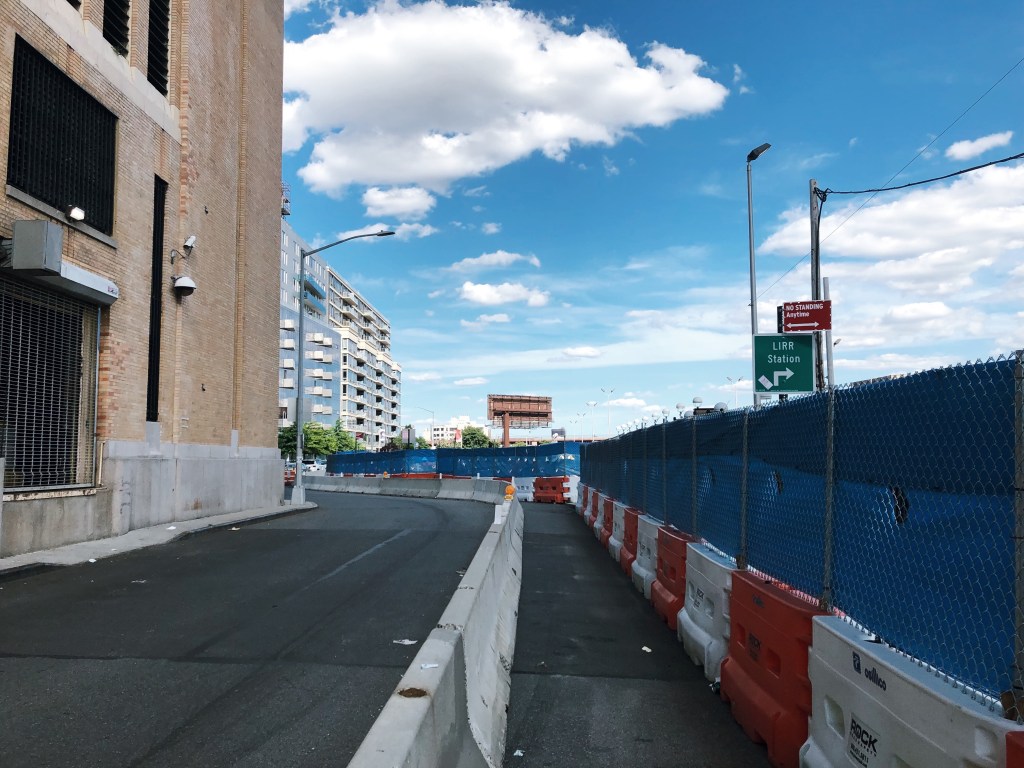
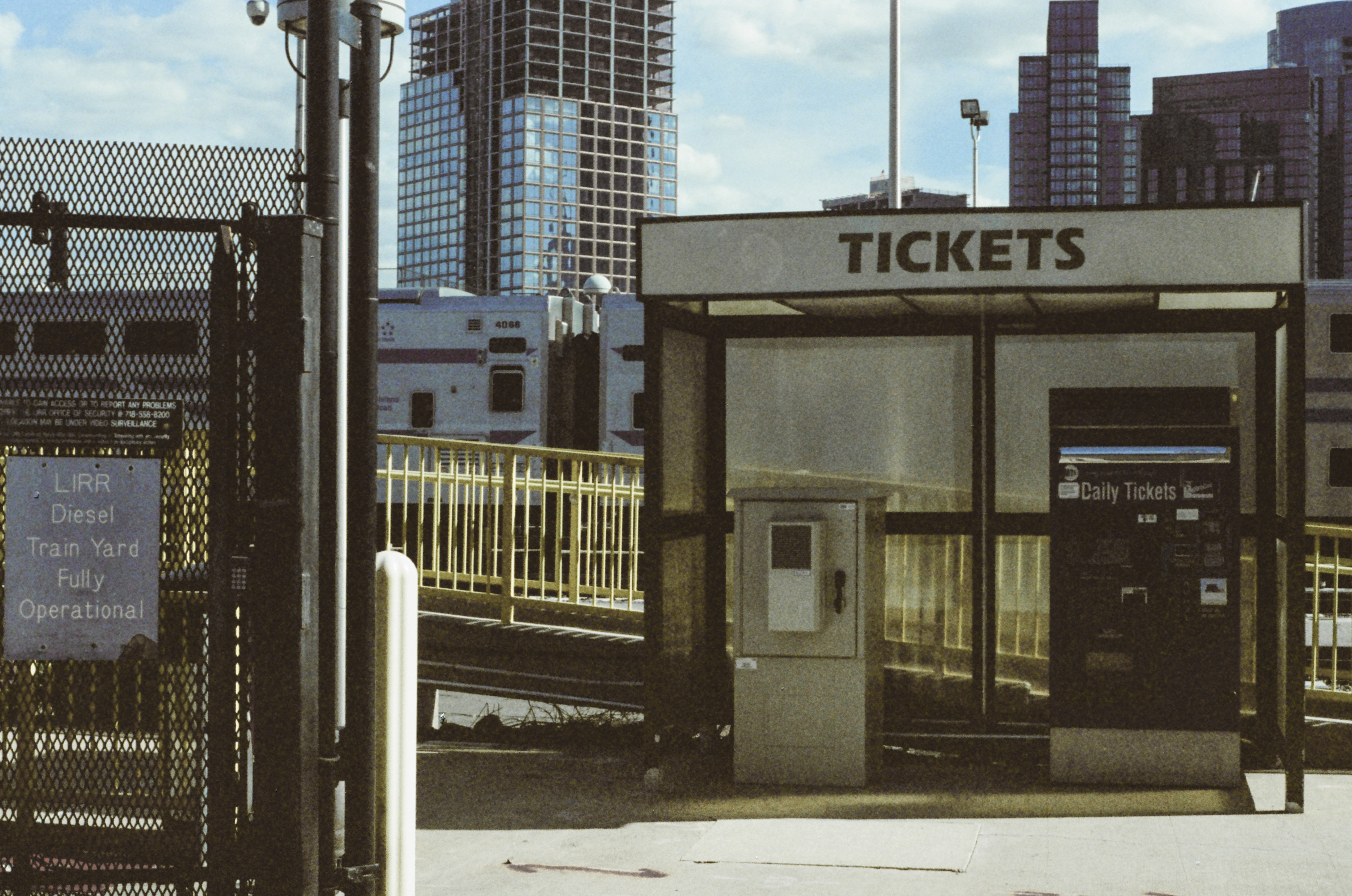
But people who live nearby could be forgiven for not realizing this station actually exists—let alone that they can take a train to or from it. Access to the station (at least right now, this shouldn’t be permanent) is along a temporary sidewalk; a single and easy-to-miss sign is the only confirmation that you are approaching the entrance to a train station.
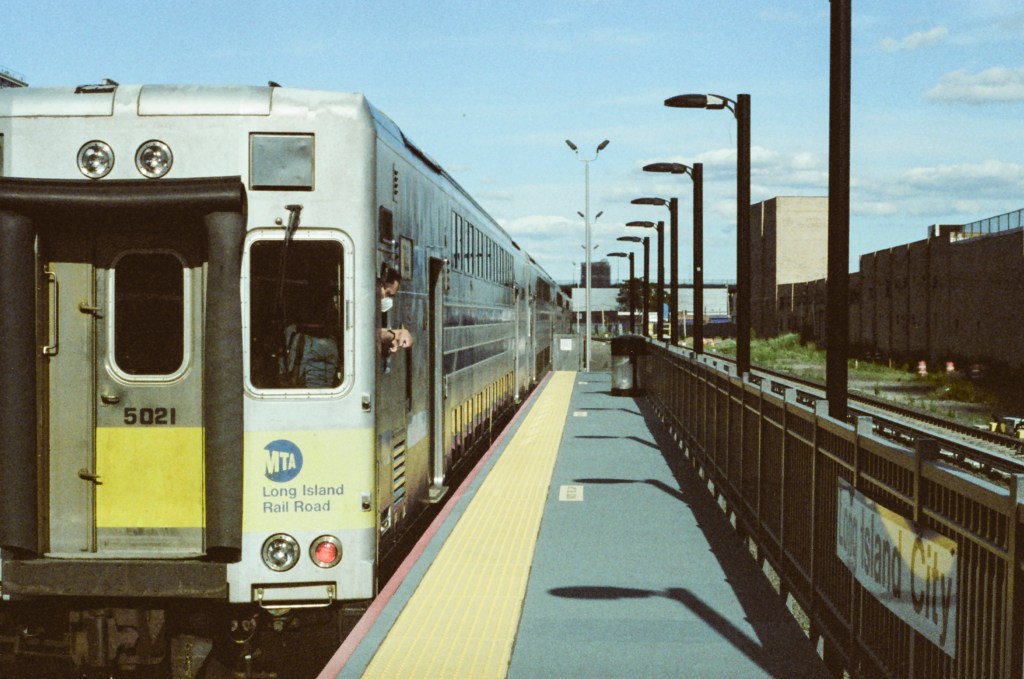
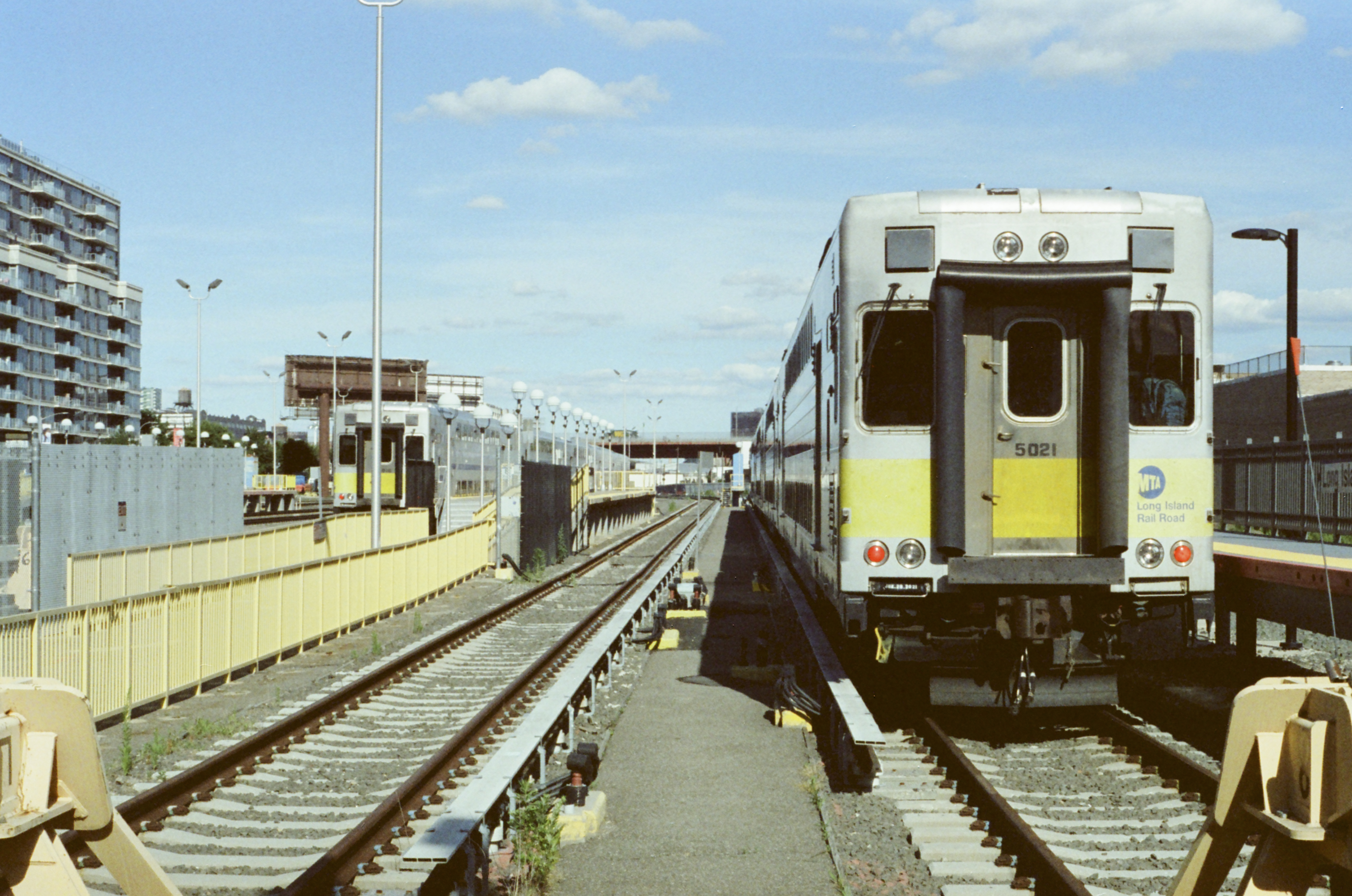
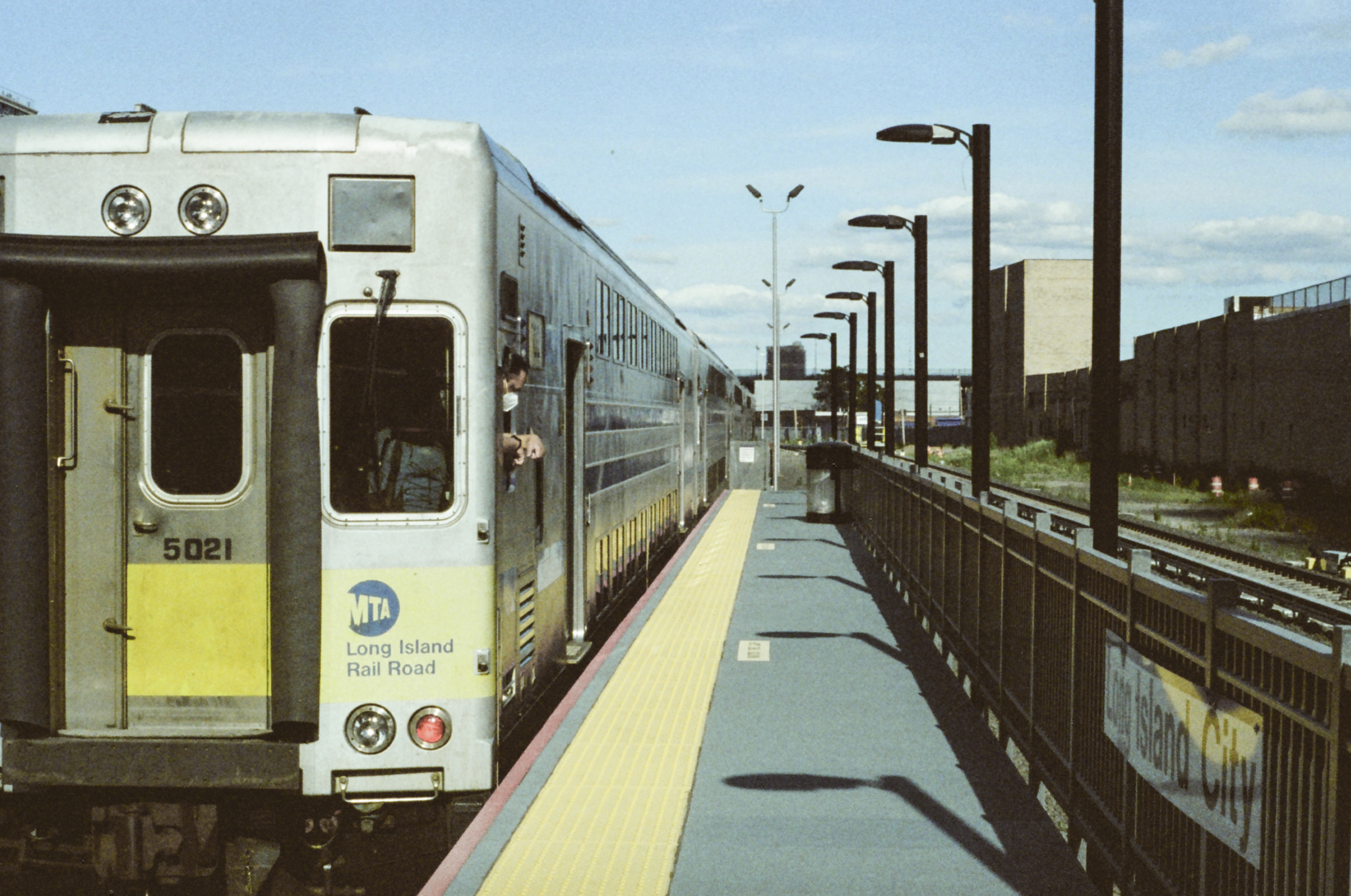
Long Island City is primarily a storage facility for the Long Island Rail Road’s diesel equipment which, because it cannot enter Manhattan, must be stored in Queens between the morning and evening rush hours. Despite this, the station has seen some minor improvements in recent years: the two platforms pictured here are new additions, as is the electrified third rail on these tracks. (Previously, only three non-platform tracks in the yard were electrified).
These two platforms are not easily accessed or visible from the current street entrance, and getting to them involves a walk around the perimeter of the yard. However, those platforms were the ones in use on this particular evening.
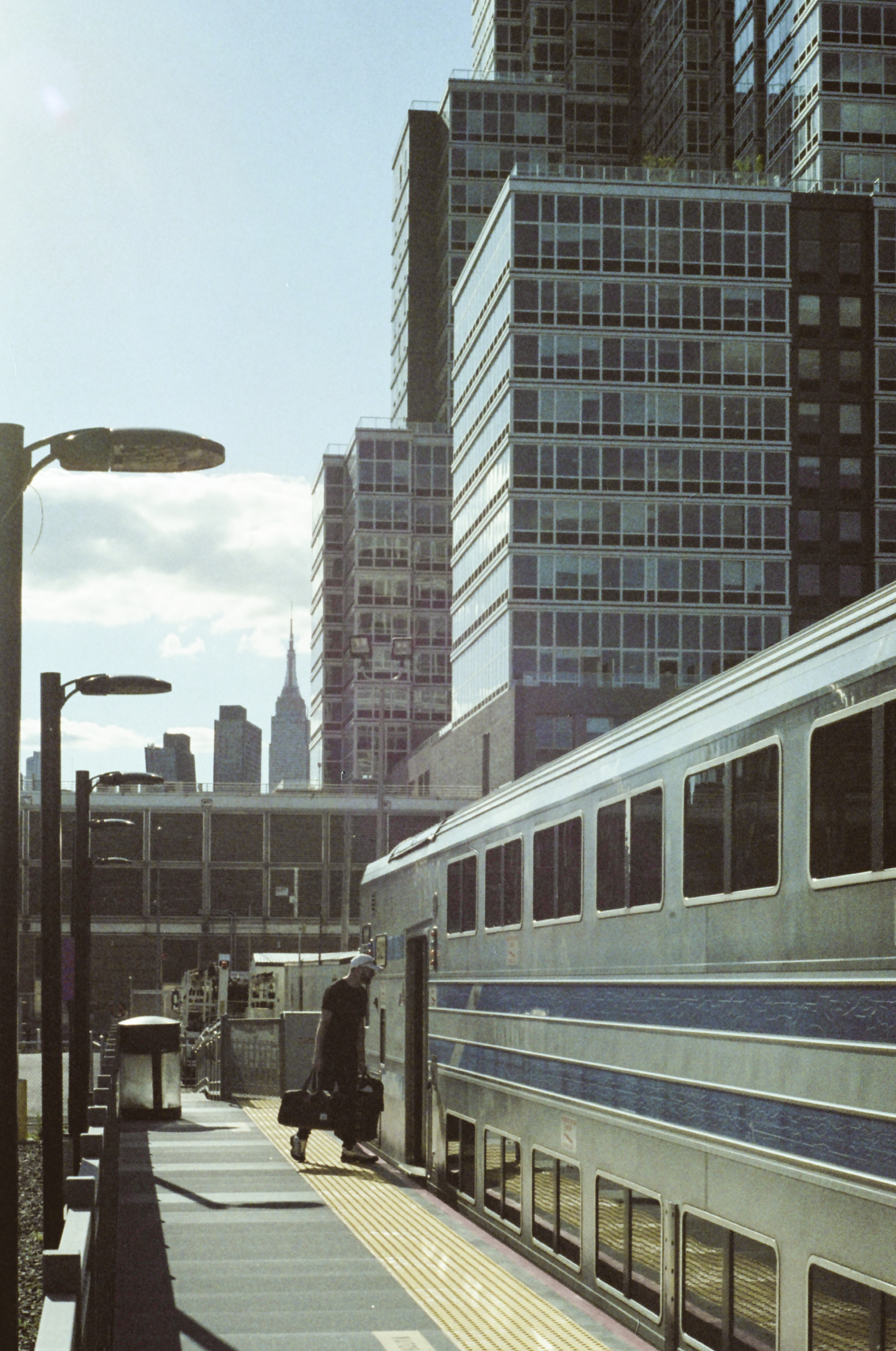
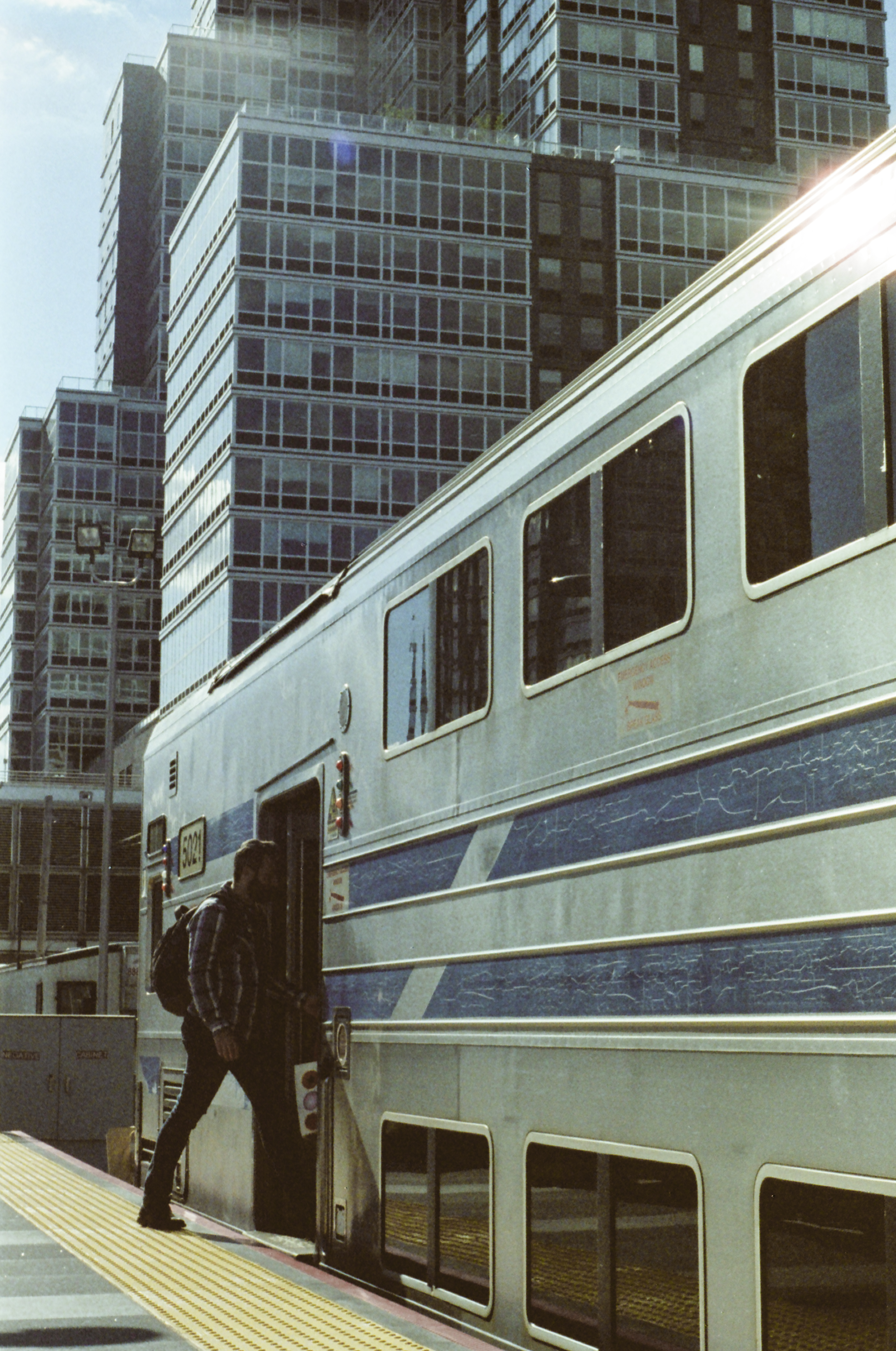
Nonetheless, the station does see some use: a handful of evening commuters at Long Island City board trains heading east towards Long Island. The number of people living within walking distance of the station has grown tremendously in the past two decades, but the station remains quiet.
This is in large part due to the fact that trains only run to Long Island a few times per day—there isn’t a large Western Queens-to-Long Island commute market, and the Long Island City station has no direct subway or bus connections (and the mediocre pedestrian access shown above).
The Hunterspoint Avenue station, a short distance east, is connected to the subway and, though service there is still limited, it receives significantly more ridership than Long Island City.
Carrying six passengers, the 5:30 to Port Jefferson—one of three trains from Long Island City in the evening—departs the station.
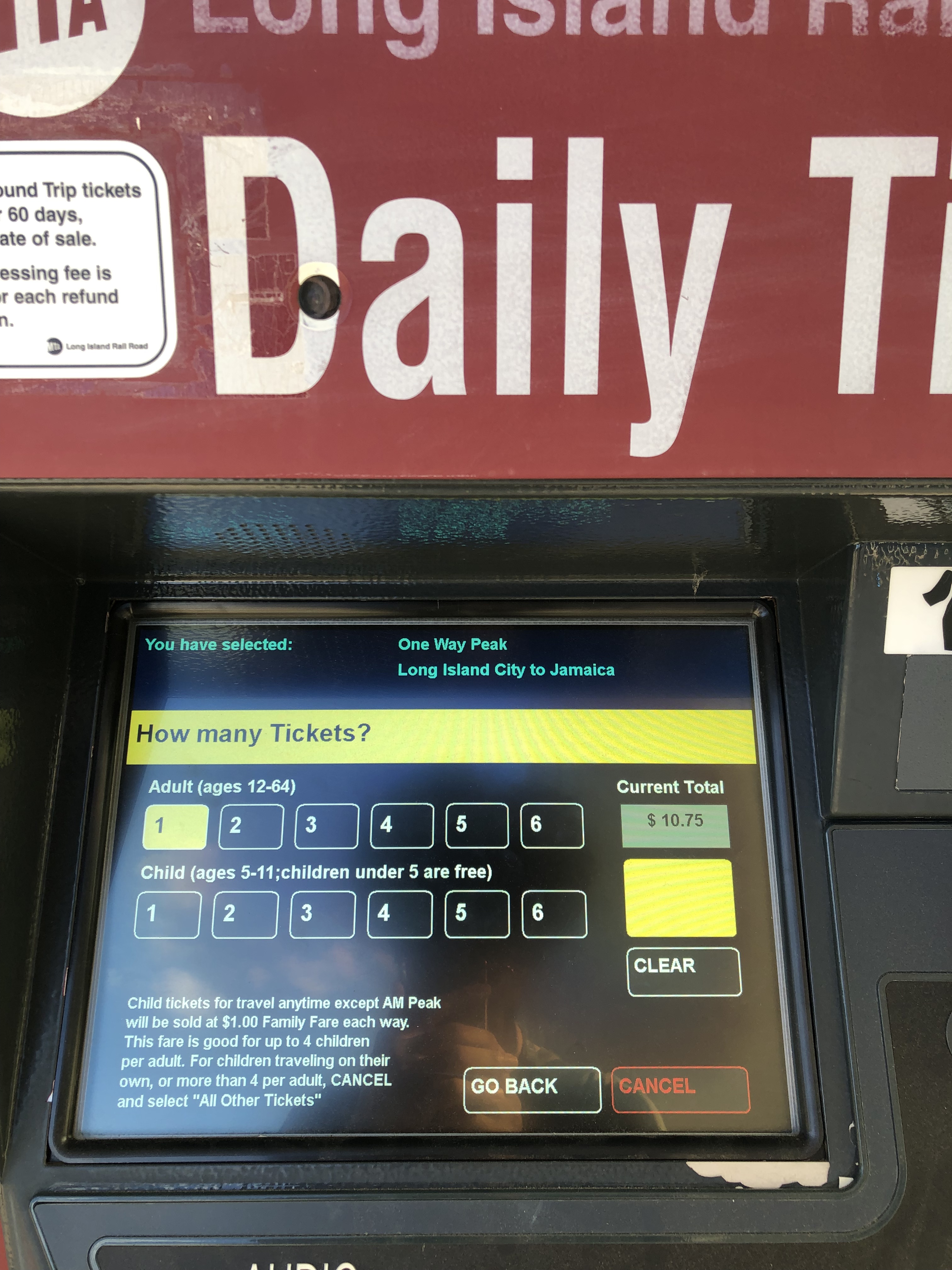
Most trains to and from Long Island City are peak-time trains, and at peak prices, a ticket to Jamaica is $10.50. We should be under no illusion that this station would be packed if tickets were cheaper—but there is almost certainly no world where stations like Long Island City are better used if commuter rail fares stay unchanged.
For as long as the station is important to train storage—which it will be for the foreseeable future—it will likely remain open to passengers, if very seldom-used. It is unique not just in New York City but in the world: there are not many other places where growing urban neighborhoods and near-disused rail stations still coexist.
Whether the Long Island City station will ever be busy again is an open question. Its adaptation—and that of other, similarly-lightly-used urban railroad stations—to New Yorkers’ modern travel needs should be on the minds of regional planners, policymakers, and transit operators as the city continues to grow, and more people hopefully turn to public transit for urban mobility.
Photography Notes
These photos were shot on Cinestill 800T film. Considering that the environment in which these were taken—a very bright, sunny evening—is the precise opposite of what this high-sensitivity tungsten-balanced film was designed for, I’d say it held up quite well. Undoubtedly, though the out-of-place nature of this film choice is evident in a number of the photographs—because of that, I wouldn’t consider this a totally fair look at what this film can really do!
The Port Authority Trans-Hudson (PATH) system is the New York City area’s second and, to most New Yorkers, lesser-known rapid transit system. For subway riders who aren’t regularly traveling to New Jersey, the PATH train can easily go unnoticed, perhaps partly because it’s given short shrift on the MTA’s subway map. But PATH is an indispensable pillar of trans-Hudson transportation; in 2019, over 82 million rides were taken on the system. Its status as New York City’s “second” subway system belies the fact that it, like the larger subway, has a fascinating history that includes a number of stories of ambitious but unfruitful attempts at expansion. The PATH system as it is today was completed in 1911, around the same time as much of the early NYC Subway. Unlike the subway, though, there have been no lines or stations added to the PATH system since then. This was not for lack of effort: in the PATH system’s 114-year history, there have been numerous ill-fated proposals for expansion. This post will focus on one of the most recent attempts at transforming the system, and the lesson of its failure for transit planning today.
During the 1970s, the PATH system nearly became the New York region’s answer to the hybrid urban subway-and-suburban rail systems that were becoming popular around the world as cities grew and suburbanization took root. Paris opened the Réseau Express Régional (RER) in 1977 using brand-new tunnels under the center of Paris to link the city’s growing suburbs. Seoul’s first Metro line, which opened in 1974, similarly provided new city-center tunnels for suburban lines. Systems like the Tokyo Metro and Berlin S-Bahn had pioneered the combination of urban and suburban transit decades earlier, providing a template for mid-century systems in Seoul and Paris, and more locally, in the Bay Area, Washington D.C., and South Jersey. Under the most ambitious PATH expansion proposals of the 1970s, it would have been possible to take a PATH train directly from Manhattan deep in to the Union County suburbs, 30 or more miles from Midtown. Why didn’t that happen, and why does our suburban rail still lag behind that of other major metropolises?
Becoming PATH: Transit Under “Political Duress”
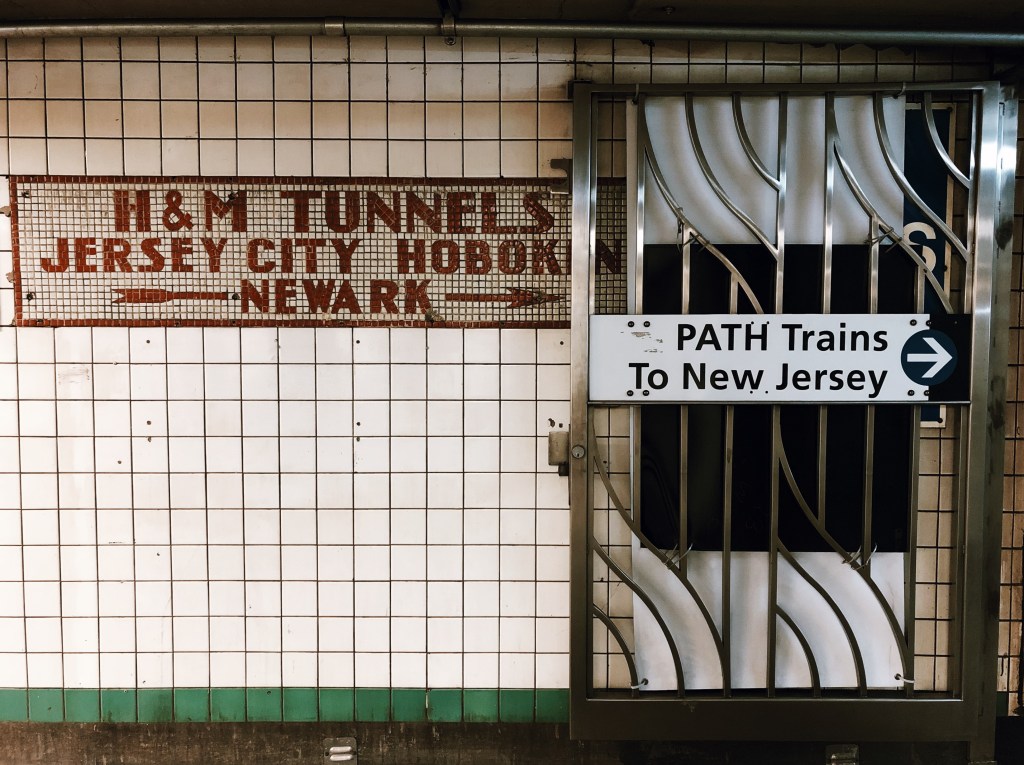
The old and the new: original mosaic sign pointing passengers from the IND to H&M Tunnels, and newer PATH signage at the 14th Street station.
The system we know now as PATH was constructed by the Hudson & Manhattan Railroad (H&M). Under the stewardship of William Gibbs McAdoo, an enterprising lawyer who later served as Secretary of the Treasury and as a U.S. Senator, the H&M was the first railroad to construct tunnels under the Hudson River. McAdoo’s success was the third attempt at building the tunnel; two prior attempts were made but not completed as the railroad ran out of money. In 1908, the H&M opened the Uptown Tubes, which carry trains from Hoboken to Greenwich Village and up 6th Avenue to Herald Square. The following year, the H&M opened the Downtown Tubes from Jersey City to Manhattan’s Financial District. Providing a connection from New York City to the farther-flung suburbs of New Jersey was always the system’s intention: the H&M’s stations on the New Jersey side of the Hudson—at Hoboken, Pavonia, and Exchange Place—were sited to provide easy access to the waterfront termini of the Lackawanna, Erie, and Pennsylvania Railroads, respectively.
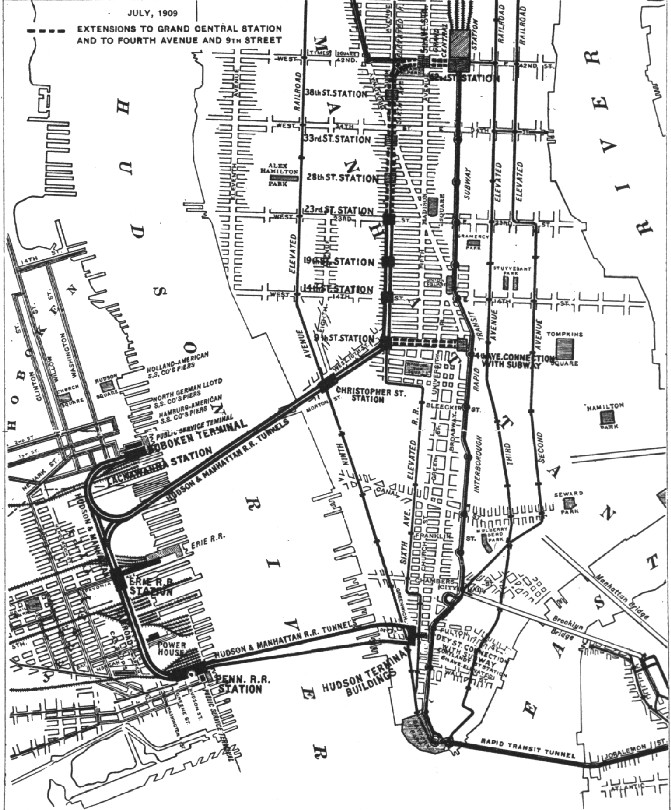
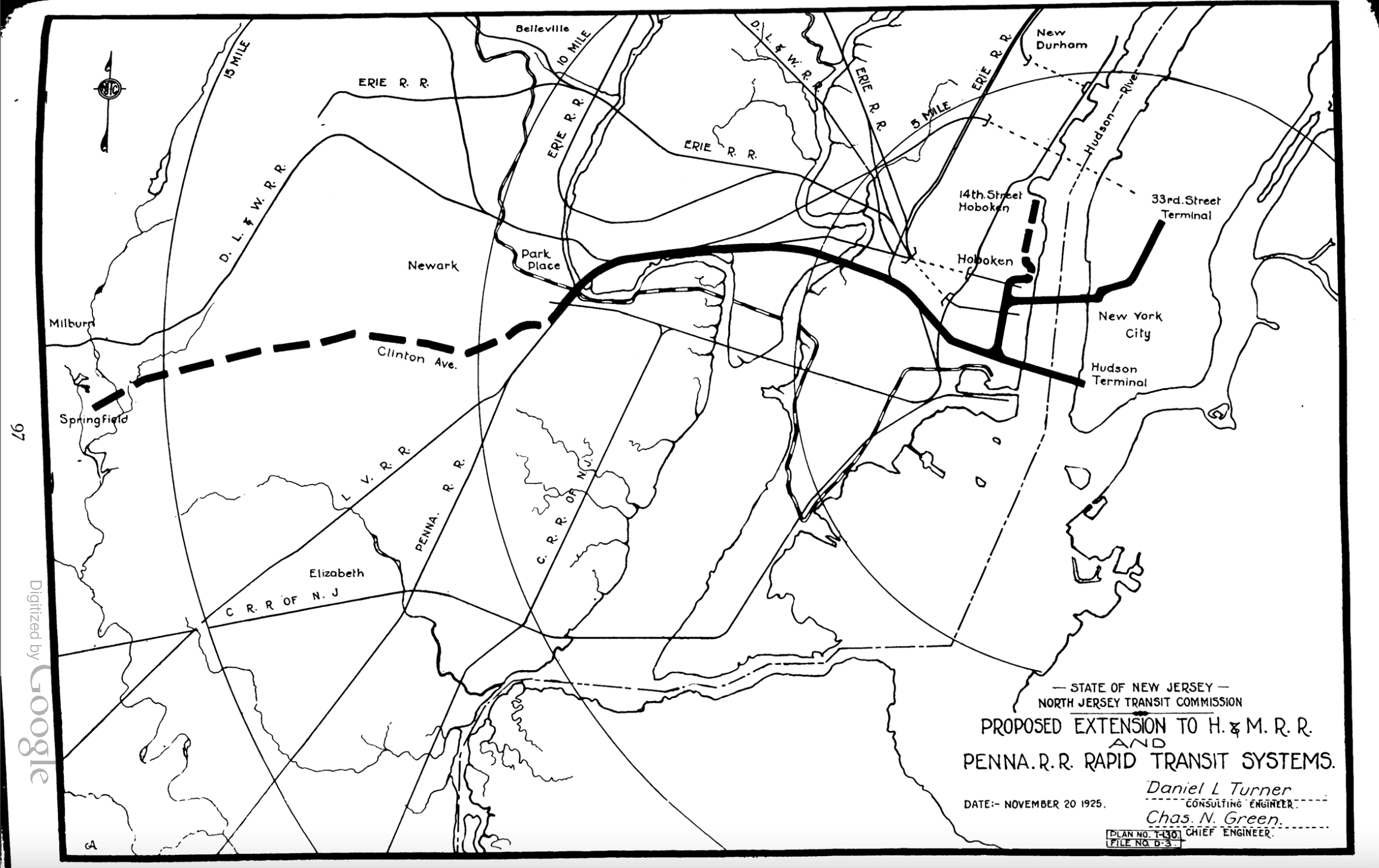
The H&M, also commonly known as the “Hudson Tubes,” aspired to enlarge their system. One of the H&M’s goals was to connect with the growing NYC Subway in more locations, and had proposed an extension of the Uptown Tubes from their 33rd Street terminus to Grand Central Terminal, and a branch from 9th Street to Astor Place. The H&M and various outside groups also tabled several ambitious expansion proposals throughout the years. As the original system neared completion, the H&M suggested a short extension to the Central Railroad of New Jersey’s Communipaw Terminal in Jersey City, and a longer extension from Newark to Orange and Montclair. In 1926, the North Jersey Transit Commission (which included in its membership Archibald Cox Sr., father of the Watergate special prosecutor whose firing would lead to the resignation of President Nixon) suggested expansion of the H&M as part of a larger transit plan to relieve pressure on the “saturated” suburban railroad terminals serving North Jersey. One proposal would extend the line 8 miles west from its Newark terminus to Springfield; the other proposal was for a short extension north through Hoboken’s city center. The commission’s full plan would have also seen extensions of New York’s subway into North Jersey, some using the existing rights-of-way of the mainline railroads. But none of the H&M’s, or the commission’s, proposals were ever realized.
Map of the H&M Railroad in 1909, depicting proposed extensions to Grand Central Terminal and the Astor Place subway station (left, link) and 1926 map by the North Jersey Transit Commission depicting proposed extensions of the H&M to Hoboken and Springfield. (right)
Part of this had to do with the fact that the H&M’s financial struggles never ebbed and, like other railroads and rapid transit operators of the time, the H&M encountered further financial difficulty and declining ridership toward the middle of the 20th century. The railroad spent the late 1930s and early 1940s fighting the Interstate Commerce Commission, eventually taking the case as far as the Supreme Court, for permission to raise fares from 8 to 10 cents, in order to cover costs. Between 1933 and 1947, the H&M incurred losses of $8M—$109M adjusted for inflation—and in 1949, the H&M argued successfully for permission to increase fares to 15 cents, threatening that without the increased fares, the railroad would be forced to close by 1952. This was too little too late, and in 1954, the H&M declared bankruptcy. By then, the railroad’s mounting debt and losses had led to conversations about having it sold to the Port Authority, the bi-state agency charged with operating interstate crossings, ports, and airports in New York and New Jersey. At the time, the Port Authority was seeking to construct the World Trade Center complex on the East Side of Lower Manhattan. Any action taken by the Port Authority required the dual approval of legislators in New York and in New Jersey, where politicians were skeptical of the World Trade Center plan. In order to secure the support of New Jersey politicians for the World Trade Center, the Port Authority moved the proposed site to the West Side, on land then occupied by the H&M’s terminal, and agreed to take over operation of the H&M service. In 1962, the Port Authority takeover of the H&M wasapproved, allowing the World Trade Center proposal to proceed, and beginning a new era for the ailing H&M.
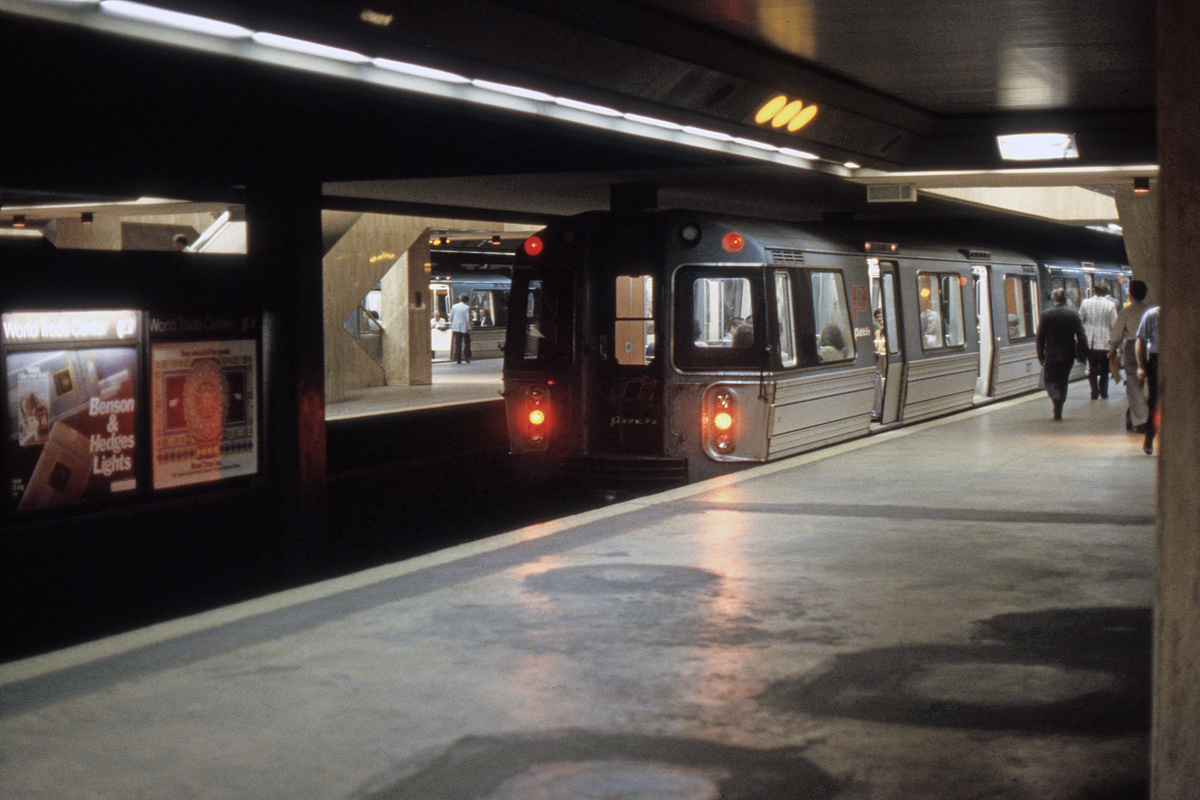
The circumstances in which the Port Authority took over the H&M were described as “political duress.” But despite their possible disinterest in running the system, once assuming control, the Port Authority quickly set about modernizing the H&M. The system was given its new name, Port Authority Trans-Hudson, and in 1965, new, air-conditioned, and very 1960s-styled rolling stock arrived to replace the aging H&M cars. The Port Authority’s landmark World Trade Center and its connected PATH station were completed in 1973—after which the Port Authority turned their attention to transforming the transit system they inherited.
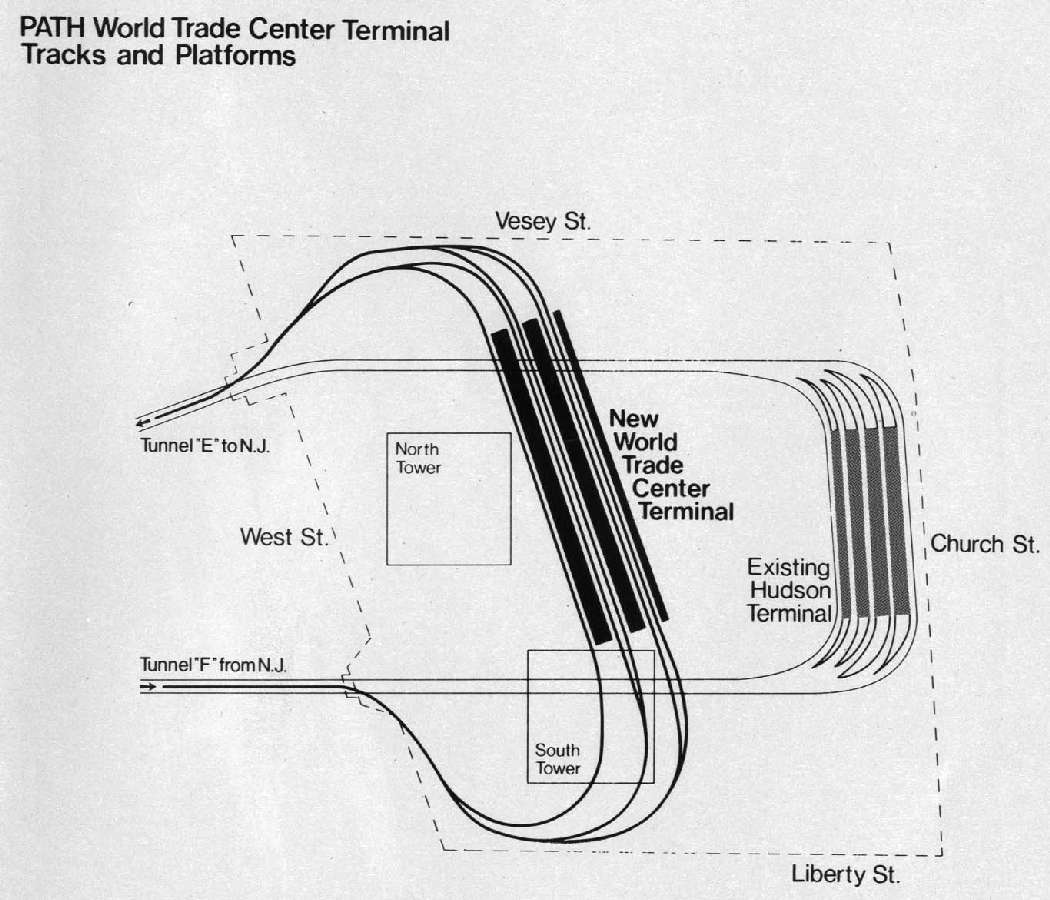
The plan for the new World Trade Center PATH station, replacing the previous H&M-built Hudson Terminal, and the larger World Trade Center site (left, link) and new PA-1 cars sitting in PATH’s yard at Journal Square in 1969. (right, link)
An Attempt To Save Public Transit
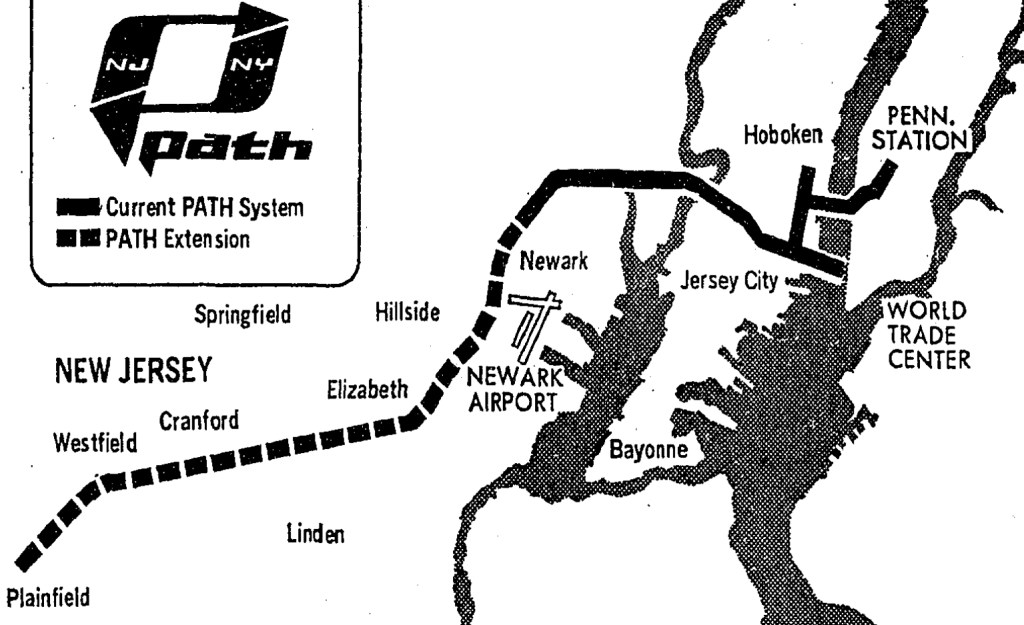
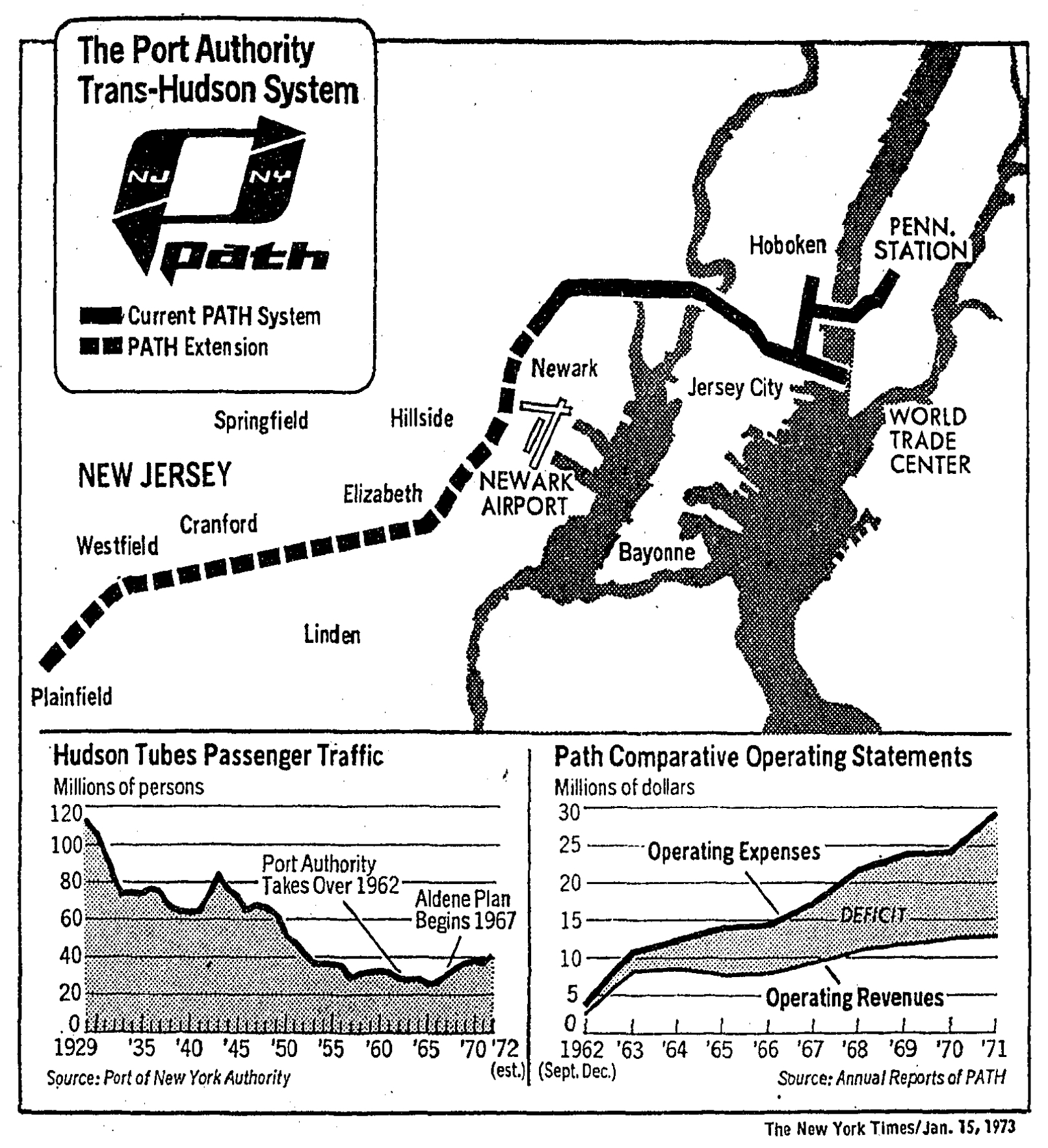
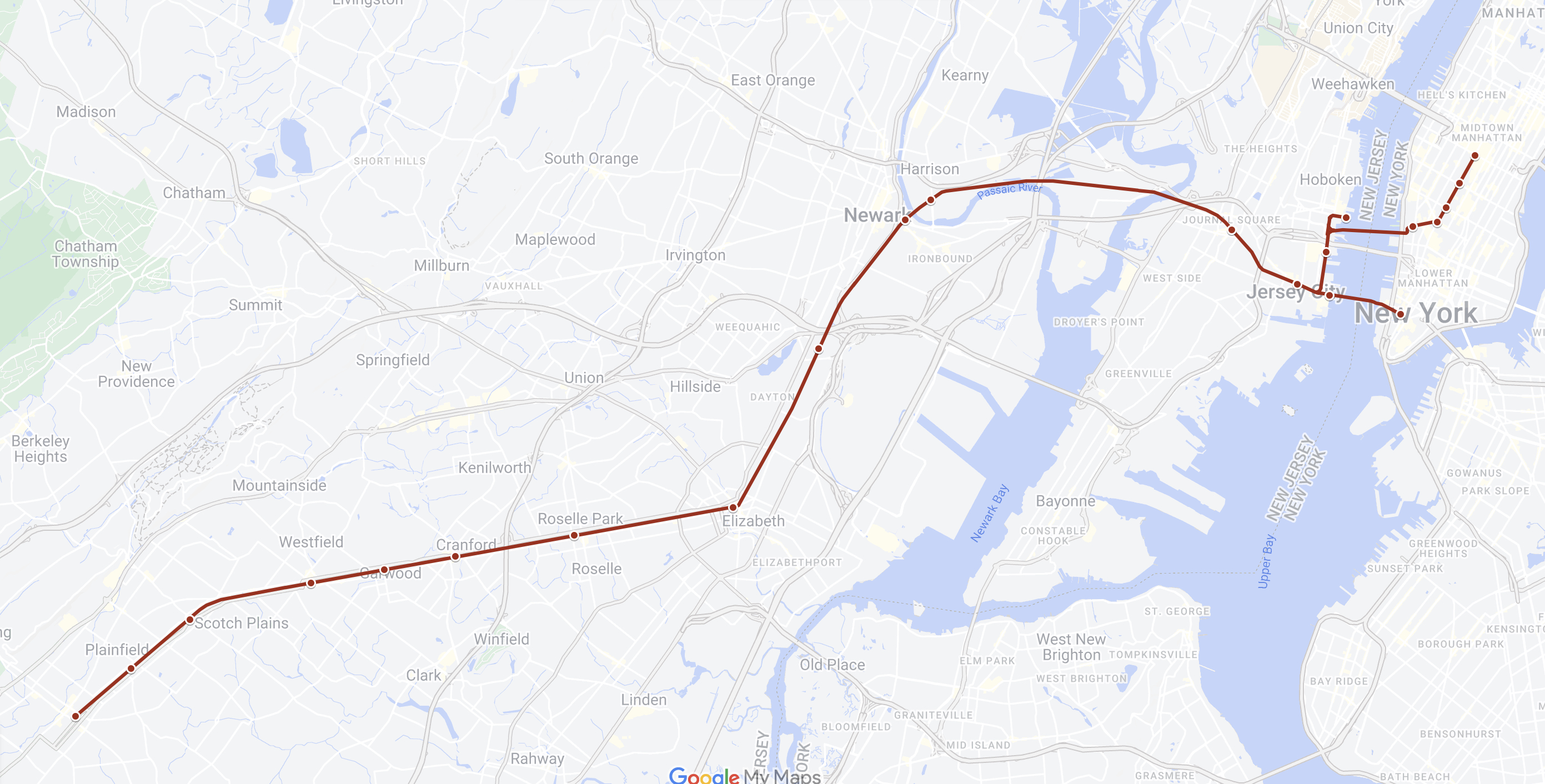
The Port Authority hoped to be the first to finally grow the PATH system. In 1973, the agency proposed an ambitious expansion of PATH to the New Jersey suburbs. Since PATH’s opening, its primary role was shuttling commuters from the termini of suburban railroads to the city, not providing direct city-to-suburb service. The Port Authority’s proposal would see PATH assume the latter role for the first time. From its terminus at Newark Penn Station, the PATH system would be extended to Newark Airport, and on to the cities of Elizabeth and Plainfield, taking over the local commuter service then being operated by the Central Railroad of New Jersey (CNJ). West of Elizabeth, the Port Authority would take over two of the CNJ’s four tracks, and electrify them using the third rail already used on the rest of PATH. The Plainfield extension would add 18 miles to PATH—more than doubling the system’s length—and the Port Authority even suggested the idea of one day extending PATH as far west as Raritan, another 13 miles from Plainfield and 40 miles from New York City. The extension to Plainfield was originally estimated to cost $402M (about $2.6B adjusted for inflation). Part of this investment would go toward additional, more comfortable rolling stock with “larger, upholstered seats,” more suitable for the longer journeys passengers would make than on the existing PATH cars. (Had the extension happened, it’s likely that PATH would look quite a lot like the PATCO system, which had been recently constructed with a similar goal of connecting South Jersey suburbs to Philadelphia).
The operations plan for the extension was equally ambitious. The Port Authority envisioned that rush-hour trains between Plainfield and New York City would run every 3 to 7 minutes—as frequently as the busiest parts of some subway lines—and every 30 minutes during off-peak hours. That timetable would be a radical change for suburban rail in 1973 (and equally so in 2022). Fares would be set at PATH’s flat rate as far as Newark Airport; beyond there, fares would be set at the same distance-based prices as the CNJ’s fares.
New York Times map showing the route of the planned PATH extension, and charts depicting the PATH system’s ridership and operating expenses. Though the Port Authority were investing heavily in the system, ridership and costs still painted a grim picture for public transit.
The large investments in PATH that the Port Authority was planning should not be mistaken for a public transit renaissance, however—the circumstances were quite the opposite. In the early 1970s, PATH ridership had begun to make a small recovery from its late 1960s nadir, but remained nowhere near the H&M’s peak ridership before 1930. The system’s expenses still far outpaced any the revenue it was making. The Port Authority’s investments in the PATH system and its expansion were as much about just saving the existence of public transit—and saving money for the state of New Jersey—as they were about substantially growing public transit overall.
Commuter Rail In Crisis
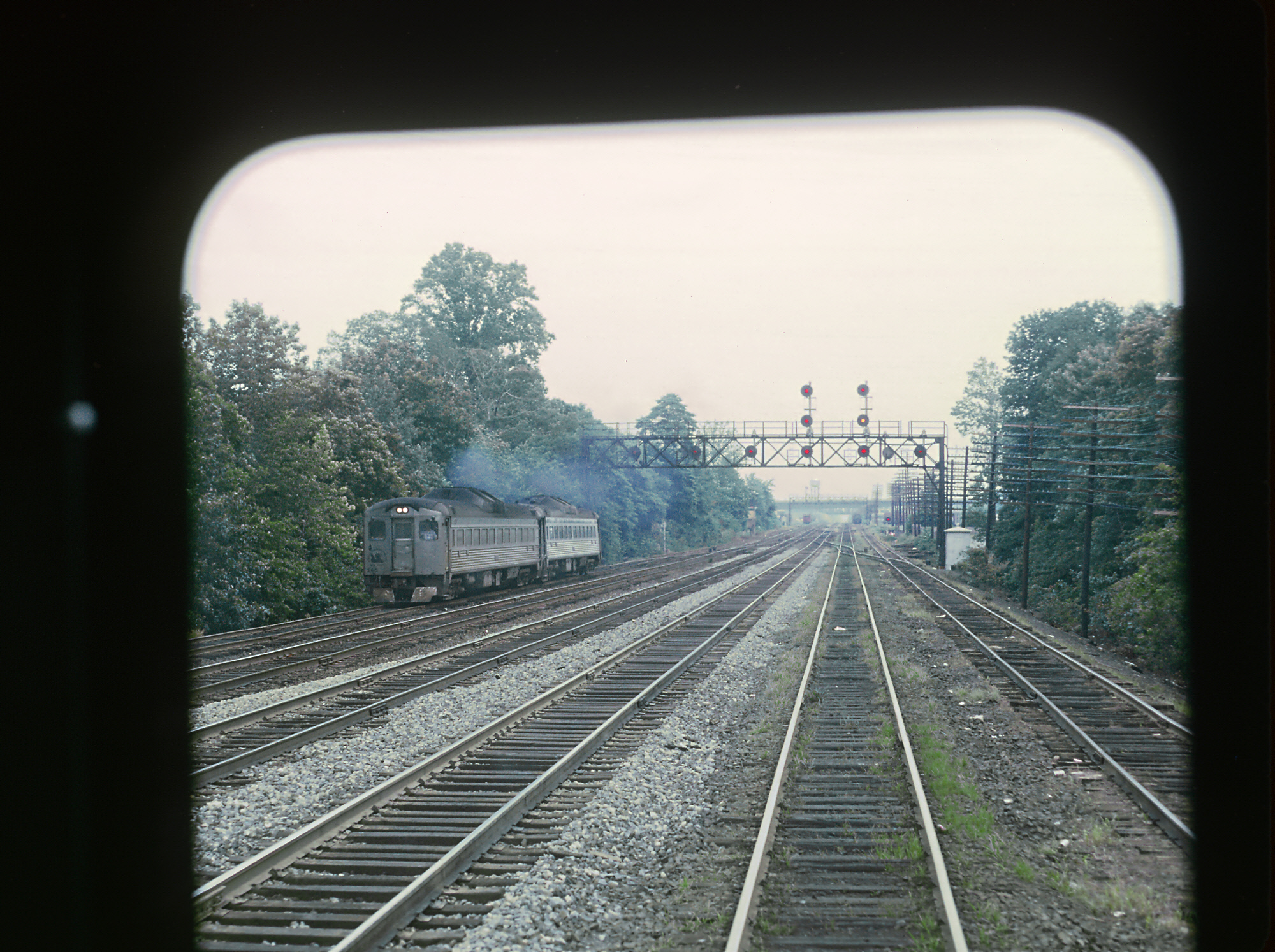
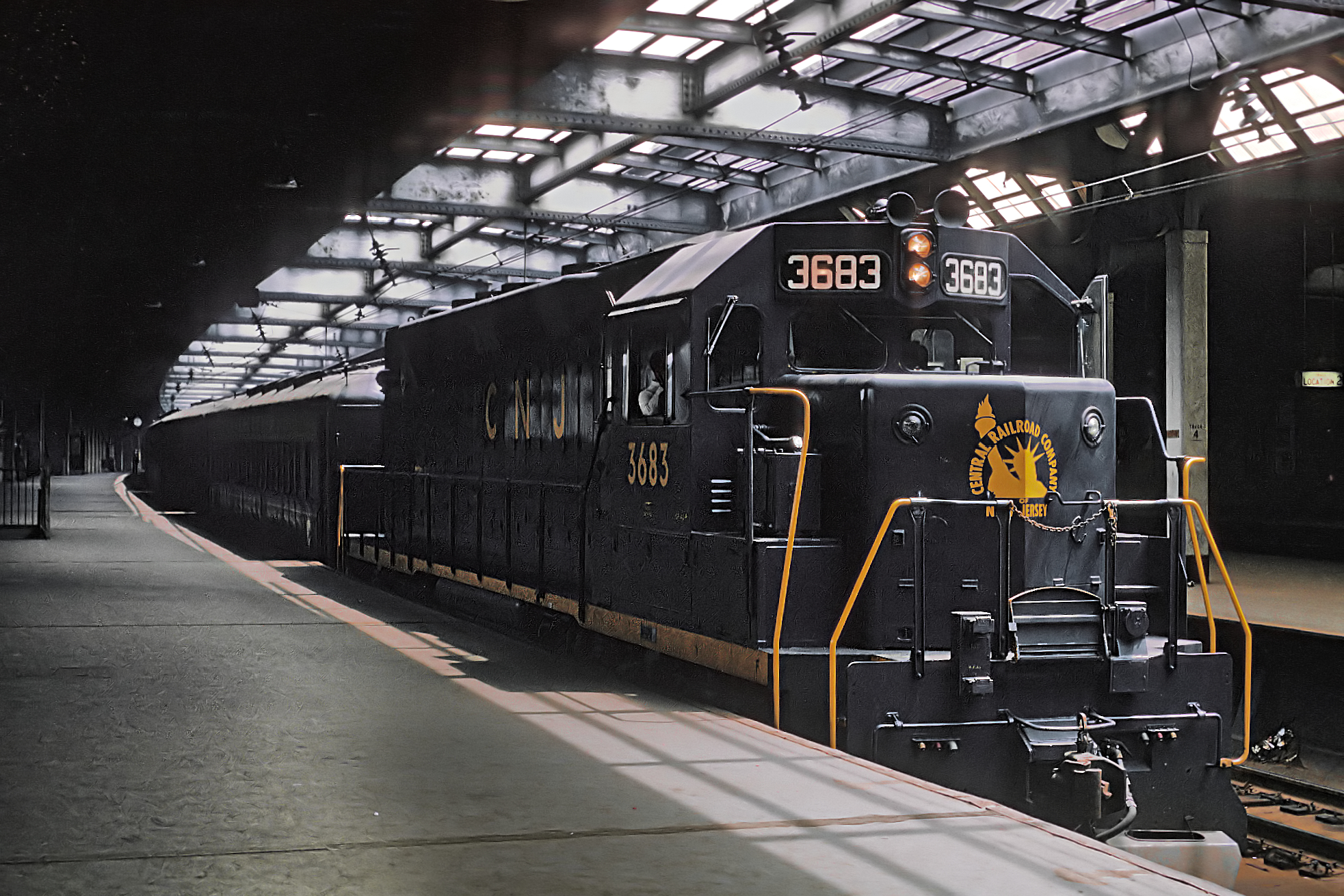
The state of commuter rail in the 1970s: CNJ RDC cars at Cranford, probably forming one of the Cranford-Bayonne shuttle trains the CNJ operated after the implementation of the Aldene Plan (left, link) and a CNJ GP40 locomotive sitting at Newark Penn Station, both in 1969. (right, link)
The 1960s and 1970s were a hugely difficult period for passenger rail across the United States. The CNJ, on whose tracks the Port Authority proposed to extend PATH service, had a particularly difficult time, as it was the only one of its neighboring major railroads to have a New Jersey terminus that remained without a mainline railroad or PATH connection to Manhattan. (Remember that the H&M had proposed serving the CNJ’s Communipaw Terminal, as it did other railroads’ termini, but never built such a connection). This meant that the CNJ were also responsible for the ferry service that carried their passengers from Communipaw to Manhattan, the operating costs of which further compounded the financial woes of the railroad. Starting in the 1960s, the New Jersey Department of Transportation began subsidizing the cost of operations and new rolling stock for New Jersey’s remaining commuter rail operators—the CNJ, Penn Central, and Erie-Lackawanna—which kept the CNJ’s trains running even after the railroad declared bankruptcy in 1967.
The state had also spent an additional $6.1M to prop up the struggling CNJ with the “Aldene Plan,” which rerouted CNJ trains away from the inconvenient Communipaw Terminal to Newark Penn Station, where passengers could change for train service—either Penn Central or PATH—to Manhattan. The Aldene Plan was named for Aldene, NJ, where the CNJ line crossed underneath the tracks of the Lehigh Valley Railroad, which provided the connection between the CNJ and Newark. When the plan was agreed in 1964, the state hoped that moving the CNJ’s trains to the more convenient Newark terminal, along with a $3M per year operating subsidy to the railroad, would return the CNJ to “sound financial condition.”
This was not to be; in 1973, the CNJ’s passenger services were still operating at a loss, despite the state’s continuing subsidy, which was then $5M per year. It is clear why the state was then searching for an alternative to railroad operation which could provide an escape from this cost—which attracted the state to the idea of replacing the CNJ’s main line service with rapid transit.
The Port Authority’s Ambition Meets Reality
Given the dire financial state of the commuter railroads, and the desire of public bodies to save transit in New Jersey, implementing the Port Authority’s proposed revitalization of suburban transit should have been smooth sailing. The PATH extension proposal was welcomed by the State of New Jersey, which gave the extension an endorsement in its 1972 master plan for transportation. In that document, the state Department of Transportation recognized that the use of PATH’s tunnels for additional suburban service could reduce the pressure on the single set of (then-Penn Central) rail tunnels between New Jersey and Manhattan. “Having one or more [railroad lines] rebuilt for operation on PATH lines,” according to the state, would improve connectivity and be a useful step toward the ultimate goal of “direct service to some point on Manhattan for all lines.” Though the Aldene Plan made it easier, CNJ passengers still had no direct access to Manhattan, and as a result, the CNJ route was a focus of the state’s effort to expand direct service to Manhattan. In the 1972 master plan, the state weighed the PATH extension against a direct extension of CNJ service to New York City:
The options are a PATH extension over this route or extension of CNJ service to Penn Station, Manhattan. The former, an extension of PATH, would provide through service for the greatest number of commuters on this route. It also would improve passenger flow and train movement at Newark and eliminate duplication of equipment and personnel inherent in an end-to-end transfer. A Manhattan Penn Station based operation of the CNJ would provide a more desirable off-peak service and a somewhat higher level of comfort. In addition to the system choice, the desirability of integrating service in this corridor with Newark Airport access is being explored.
The state identified several merits of the PATH extension, not just for CNJ passengers, but for streamlining the state’s passenger rail network as a whole. As the project evolved, the state government became its strongest supporter, particularly after Brendan Byrne, who was enthusiastic about the Port Authority expanding its rapid transit operations, took office as Governor of New Jersey in 1974. Byrne more enthusiastic about the prospect of large-scale PATH than the Port Authority itself, battling with the chairman of the Port Authority, and contending with the resignation of a Port Authority commissioner who disagreed with his vision, to keep the PATH extension on the table. Despite the support of the State of New Jersey, and the Governor especially, the Port Authority’s plan quickly became unstuck as they attempted to begin construction.
In 1975, the Port Authority applied to the federal Urban Mass Transit Administration (UMTA) for a $322M grant to start work on the extension, but the Port Authority was met with questions instead of quick approval. The UMTA was unconvinced that the PATH extension was a good use of the money the Port Authority was seeking, one of the highest requests in the UMTA’s history. At the heart of the UMTA’s unease to the PATH plan was a question that remains relevant to transit planning today: why are the outsize capital costs of converting a railroad line to rapid transit service worth it, when improving existing railroad operations could deliver similar benefits for much less expense? Questions of cost-effectiveness also came from within the state. Meeting with passengers, New Jersey’s assistant commissioner of public transportation admitted that electrification of the CNJ main line, which would allow existing CNJ trains to run directly to Manhattan, would cost less than the PATH extension. The state had also agreed to consider keeping some passenger service west of Plainfield—meaning that, potentially, the state would have to fund the costs of PATH construction and continue the railroad subsidies anyway. As the project’s cost-effectiveness was questioned, and tensions between state and federal government continued, U.S. Senator Clifford Case (R-N.J.) advocated the UMTA’s rejection of the PATH extension.
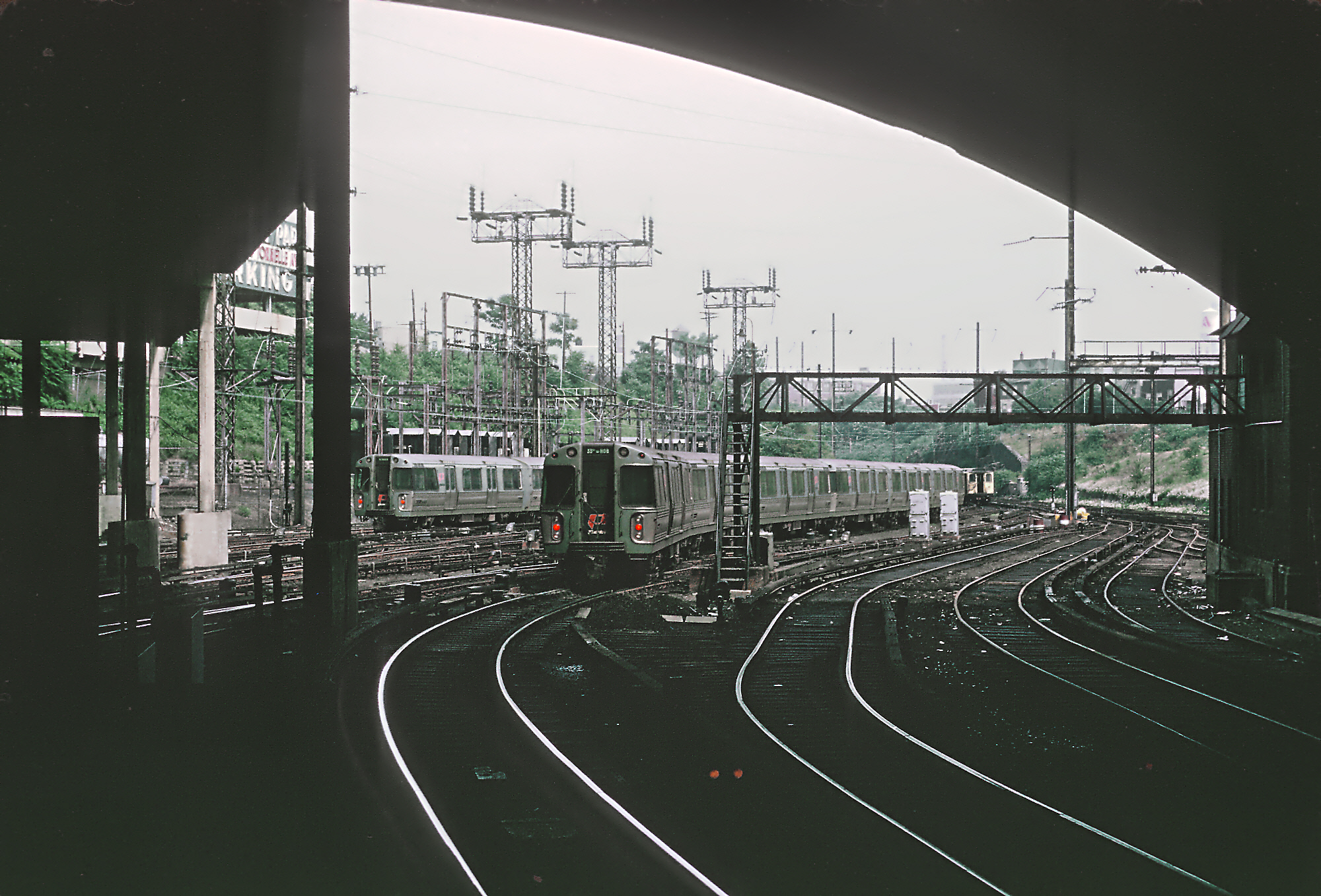
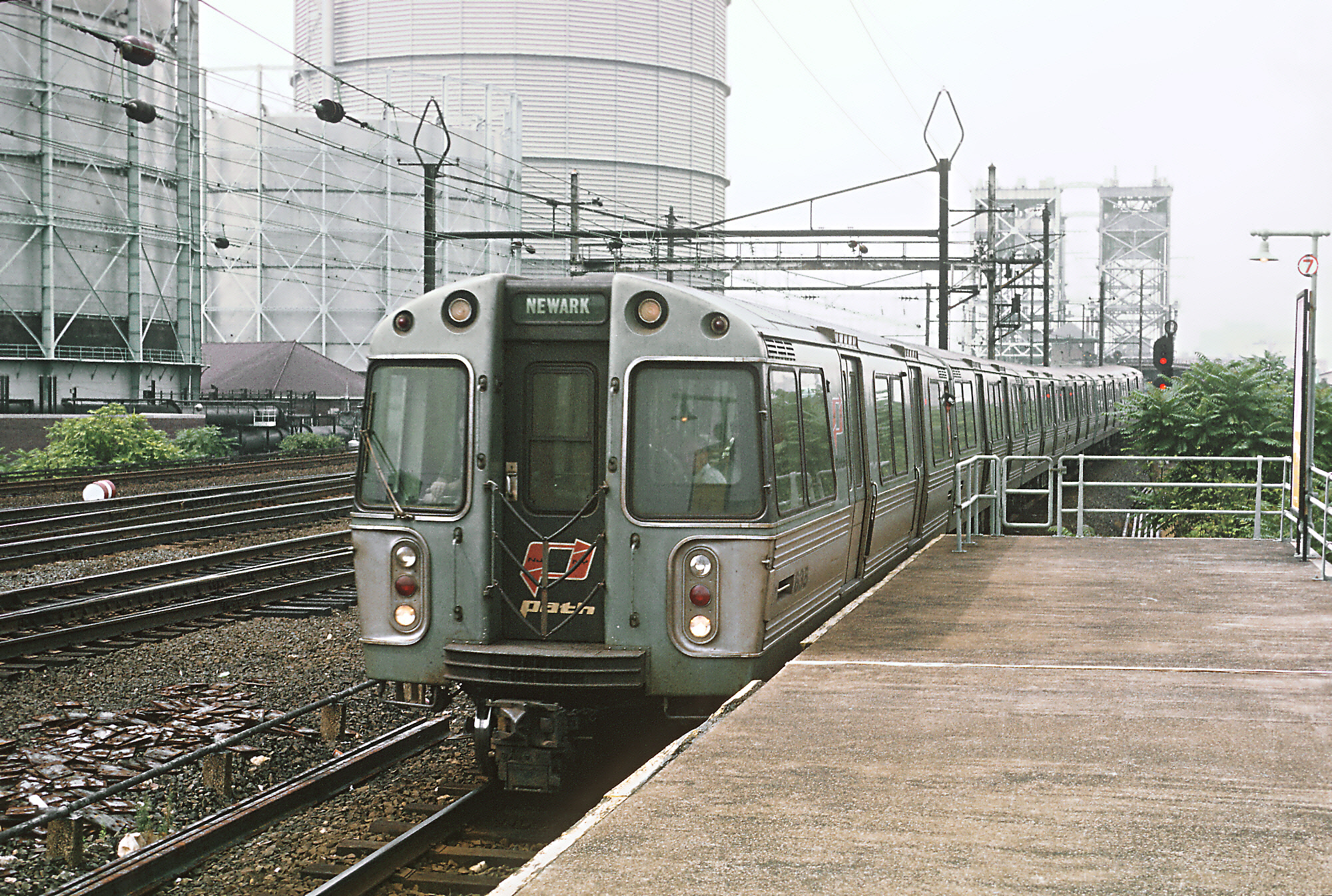
PATH train arriving at Harrison, bound for Newark, in 1969. (link)
The state had presented to the UMTA a number of alternatives for improving transit on the CNJ corridor. The first was the PATH extension, the most expensive option, but the option with the lowest projected annual operating deficit, an estimated $6.4M in 1985. The state also considered three potential enhancements of existing CNJ service: upgraded rolling stock, the addition of a third track on the shared CNJ-Lehigh Valley line between Aldene and Newark, and electrification of the CNJ mainline. Though the rail alternatives could be implemented at a lower cost, they had projected yearly deficits significantly higher that the PATH extension, between $14.8M and $15.9M. These projected deficits explain the state’s enthusiasm for the PATH extension, as it would entail a smaller financial obligation in future years. The UMTA remained unconvinced of the case to hand over a large amount of federal money, mostly to allow New Jersey to save itself money in the future. The UMTA’s director, Frank Herringer, was forthright: “We are concerned that for a great increase in construction costs—more than $200‐million — you get a small saving in operating expenses…we need more substantiation before approving the grant.”
In December 1975, the UMTA rejected the proposed PATH extension to Plainfield. The project was revived in 1976, when the federal Department of Transportation said it would be willing to fund the PATH project as part of a broader agenda for transit in New Jersey. Unfortunately, this revival was extremely short-lived: in 1977, a Supreme Court ruling stated that covenants in 1962 Port Authority bonds prevented the Authority from using its revenue to finance “any commuter rail projects.” In June 1978, Governor Byrne, once the project’s most passionate advocate, declared the PATH extension to Plainfield dead. In its place would be a far-less ambitious upgrade to the equipment used on the CNJ line. The dream of rapid transit to the suburbs was over.
An Alternate Transit History
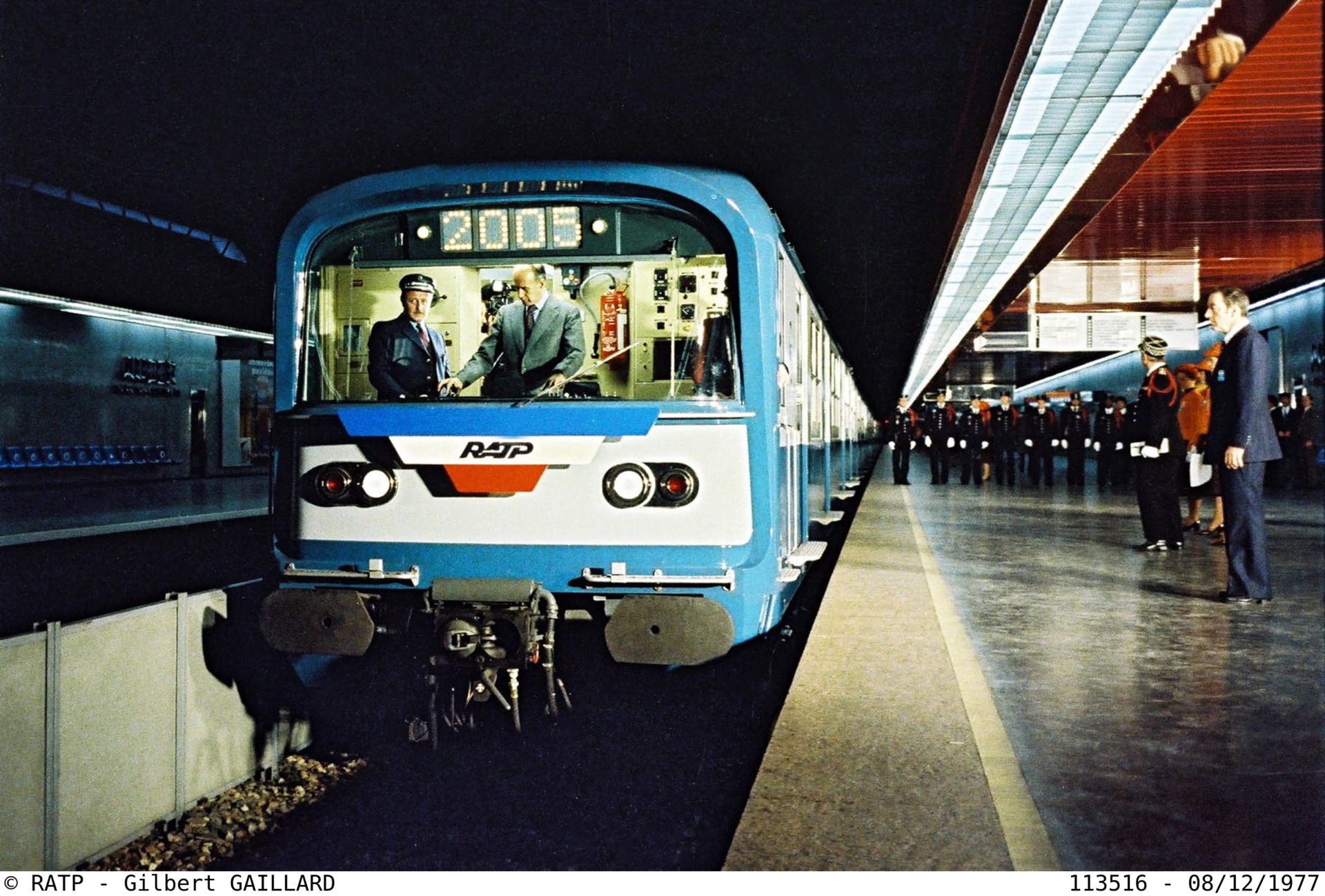
PATH’s new World Trade Center station (left, link) and one of the Paris RER’s new stations on that system’s inauguration day. (right, link).
The PATH terminal at the World Trade Center was described by the New York Times as “[resembling] newer stations on the Paris Metro.” Given that the World Trade Center opened around debut of the Paris RER, this is possibly referring to some of the new RER stations. But without the planned expansion of PATH, the World Trade Center terminal would never serve as a true regional transit hub on the scale of Paris’ RER stations. Nor would the region see the ramifications of the Plainfield extension, which would likely have been felt beyond the PATH system. Had the reuse of mainline railroad lines by PATH been a success, it may have helped to spur on similar proposals made by New York’s MTA, which would have seen subway trains extended on Long Island Rail Road tracks in Eastern Queens. The frequent service would be conducive to stronger integration between bus and rail in the New Jersey suburbs, in turn likely increasing the mode share of transit among commuters. The addition of rapid transit to large swaths of North Jersey would have been transformative. No less accessible by transit from Manhattan than parts of New York City’s outer boroughs, many Union County suburbs—and its urban county seat, Elizabeth—would look very different, likely with lots more housing and many more jobs located in more walkable downtowns.
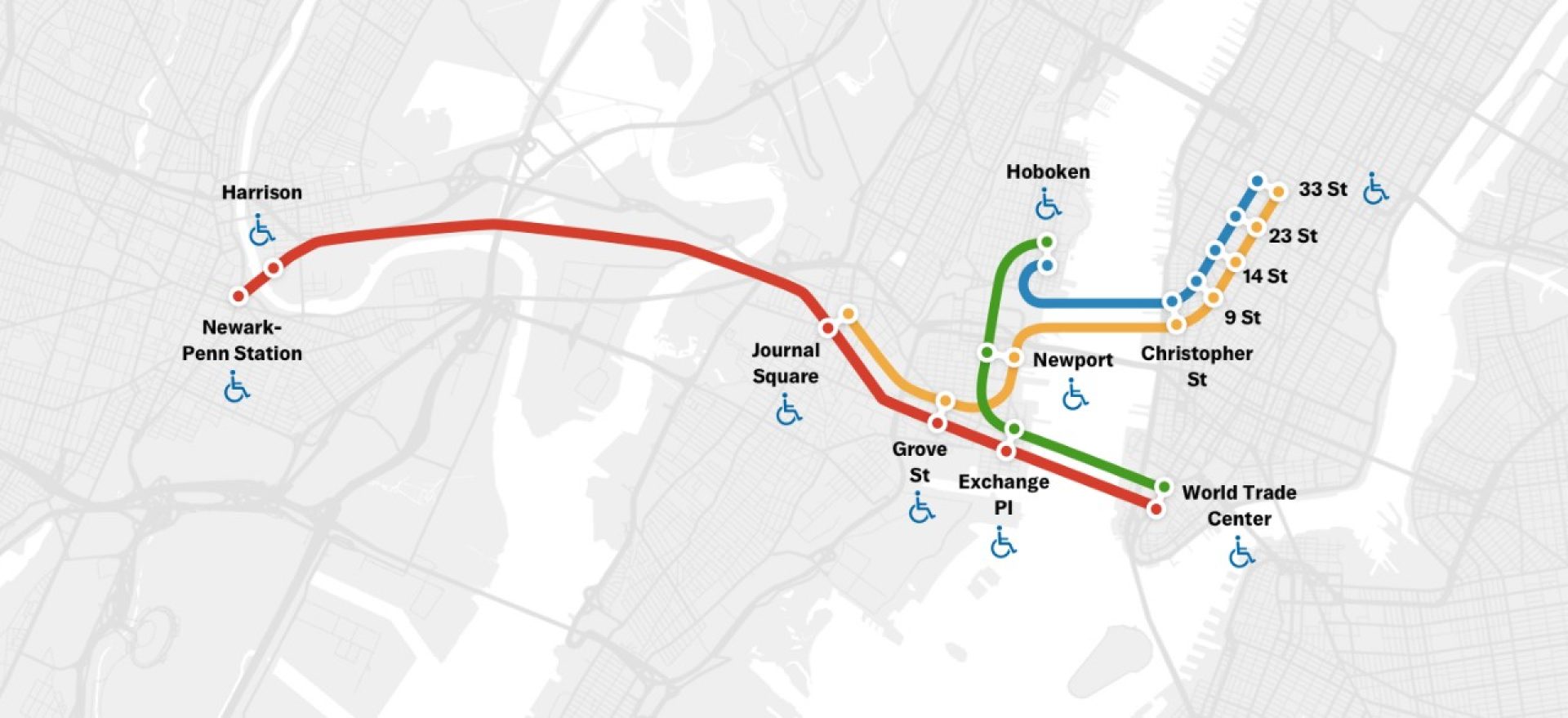
Map showing what the PATH system would look like today had it been extended to Plainfield.
However, the UMTA was right—fundamentally, the PATH extension plan was flawed. With the Plainfield extension, the Port Authority was attempting to use a major capital construction project to solve what was ultimately an operations issue. There is a popular transit-planning mantra, which originated in German-speaking countries: Organisation vor Elektronik vor Beton (organization before electronics before concrete). In other words, transit operators should ensure that less-costly organizational fixes are made before pursuing expensive construction projects. UMTA Director Herringer essentially invoked this phrase, without saying the exact words, in his criticism of the Port Authority’s funding request. The PATH extension failed in part because it took a reverse approach, aiming to fix an organization issue (high operating cost of railroad service) with particularly-expensive concrete (a rapid transit extension). The State of New Jersey might have achieved more material upgrades to transit through electrification of and upgrades to the CNJ main line, while also attempting to lower the operating cost of railroad service. In the 1972 transportation master plan, the state advocates the use of automatic fare collection on the Penn Central lines—which would help lower some operating costs—but that suggestion went nowhere.
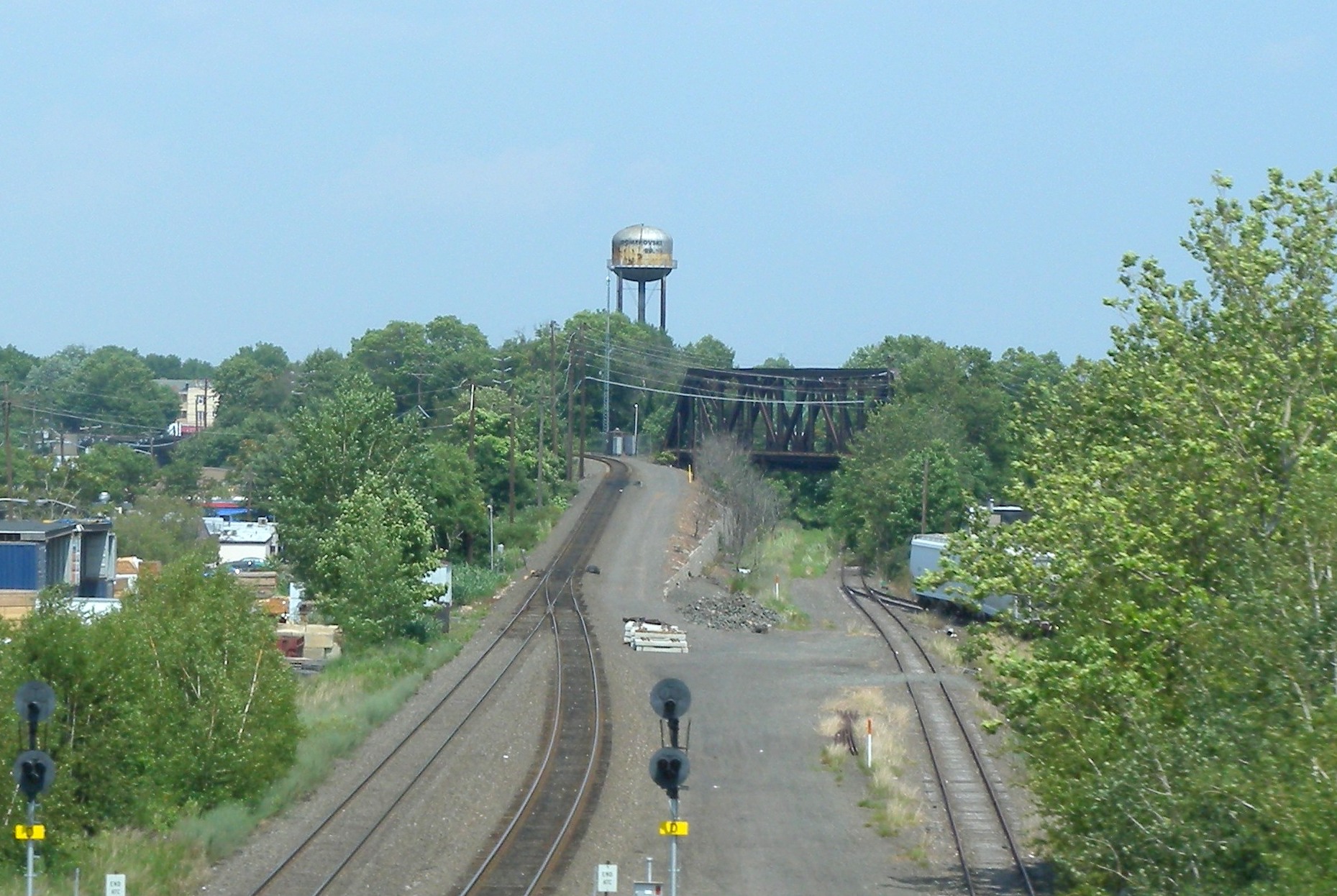
The Aldene ramp, which connects the former CNJ to the former Lehigh Valley line to Newark has only a single track, which also contributes to low capacity on the Raritan Valley Line (luckily there is space for another track—let’s add it!) (link)
There were some improvements were made to commuter service on the CNJ line. In 1976, several bankrupt railroads, including the CNJ and Penn Central, were consolidated into the federally-backed Conrail, and in 1983, suburban rail in New Jersey was taken over by the new, state-owned New Jersey Transit (NJT). Some of the suggested upgrades to former CNJ service were made by NJT, which ordered new rolling stock for the line in the early 1980s, but many of the problems of the 1970s remain problems today. The former-Lehigh Valley line between Newark and Aldene remains a bottleneck, as it has only two tracks shared by passenger and freight trains. The line was never electrified; until the arrival of dual-mode locomotives in the 2010s, there was no way to offer direct service to Manhattan. The direct service to Manhattan offered today is very limited because the cross-Hudson capacity problem identified in 1972 was never addressed, meaning there is no room in the tunnels to Penn Station during peak hours for Raritan Valley Line trains.
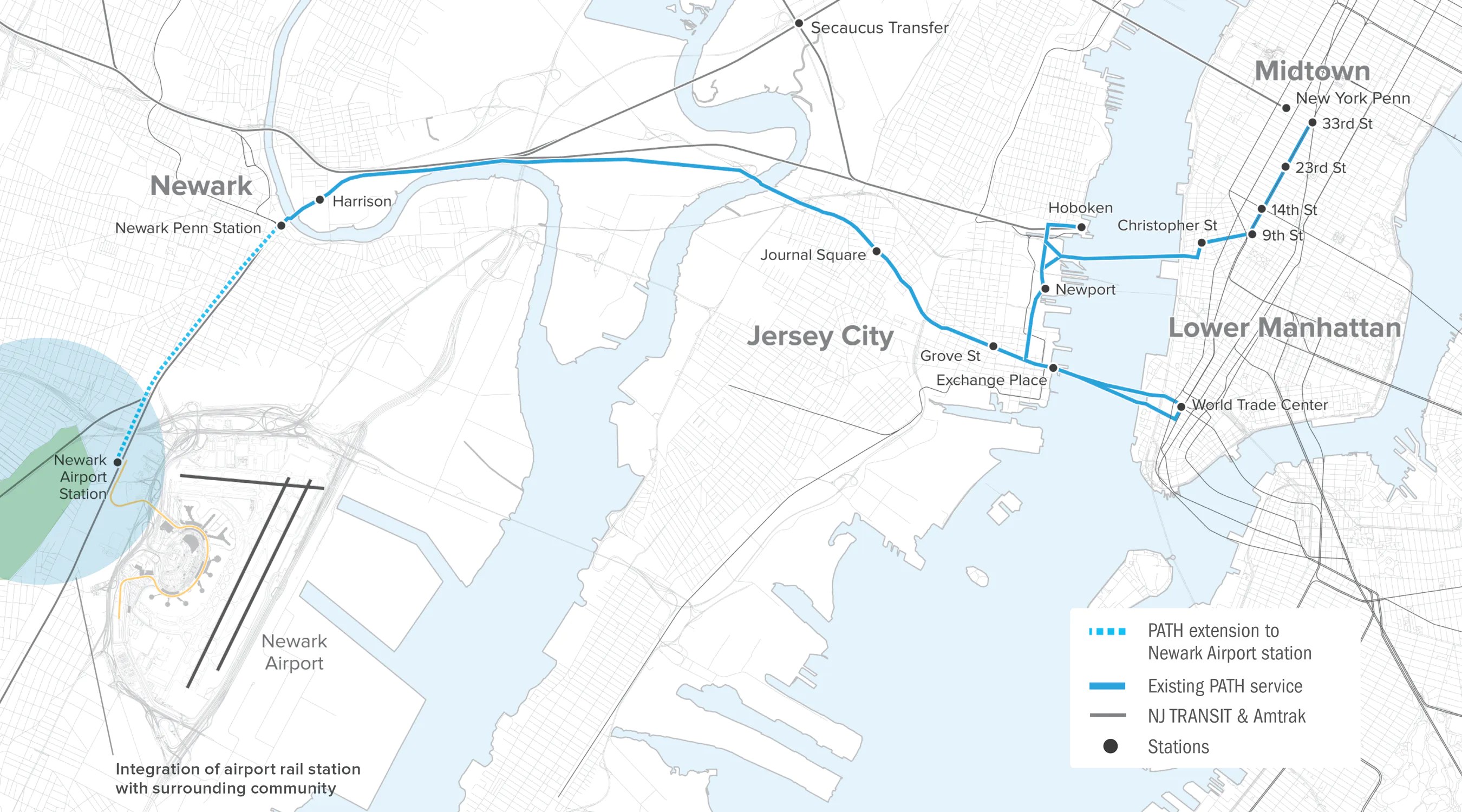
Finally, PATH expansion is back on the map. The Port Authority plans to spend $1.7B to extend PATH 2.4 miles from Newark Penn Station to Newark Airport. (At $708M per mile, that is a more-than-threefold cost increase compared to the 1970s Plainfield extension, at $200M per mile). It is worth noting that Newark Airport already has a railroad station, served by New Jersey Transit and Amtrak trains, in the same location as the proposed new PATH stop. The questions raised by the Plainfield extension are again relevant: is this project accomplishing something which cannot be accomplished by organizational or policy-based changes to railroad service? The failure of the Plainfield extension should be a cautionary tale to transit planners today. We need a lot more transit, in North Jersey especially—but we all lose out on better transit, sometimes for generations, when projects undermine their own potential effectiveness by taking a backwards approach to problem-solving.
Map of today’s PATH network, with the proposed Newark Airport extension, courtesy of the Regional Plan Association. (link)
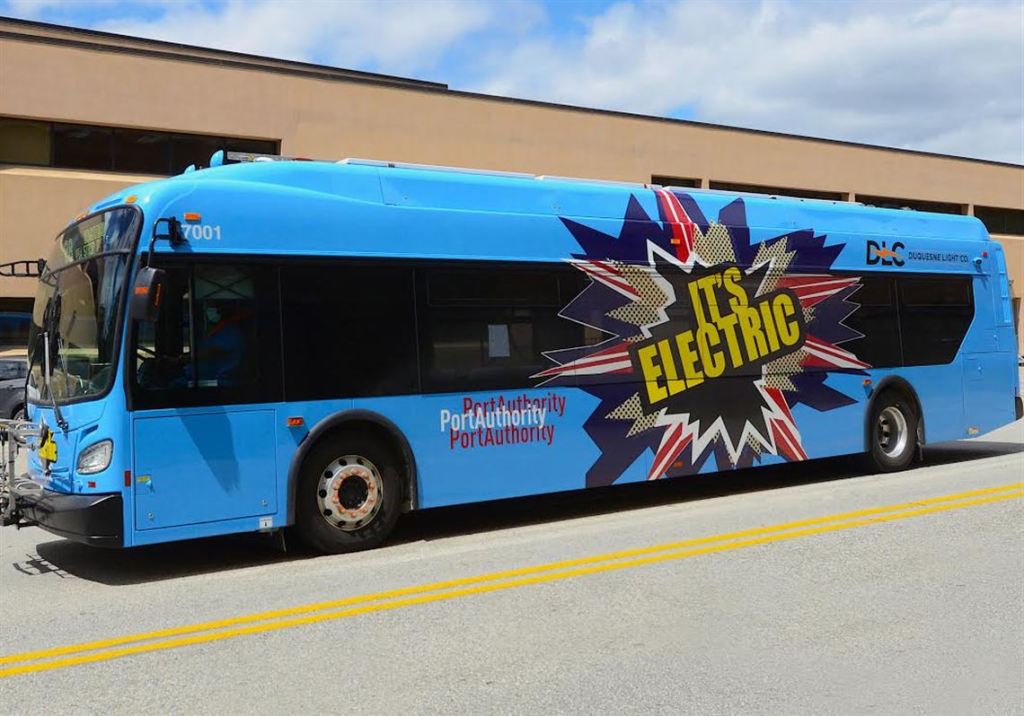
Electric buses are coming to Pittsburgh. The Port Authority of Allegheny County (PAAC) introduced a handful of battery-electric buses to service in the past year, and has placed orders for additional electric buses to be used on the forthcoming bus rapid transit service between Downtown and Oakland. Around the country, transit agencies are ordering electric buses, and subsidies for electric buses may become significant to federal transportation policy. With all the recent buzz around electric buses, you could be forgiven for thinking electric buses are new technology—but they’ve actually been around for decades. Different to the battery-powered vehicles in the press today, trolleybuses—electric buses which draw power from overhead wires—were once far more prominent, though only survive in a few US cities (Boston, San Francisco, Seattle, Philadelphia, and Dayton). Returning to the trolleybus—aided by some advancements in battery technology—is the best way to electrify the United States’ bus fleet, and Pittsburgh happens to be a great place to start.
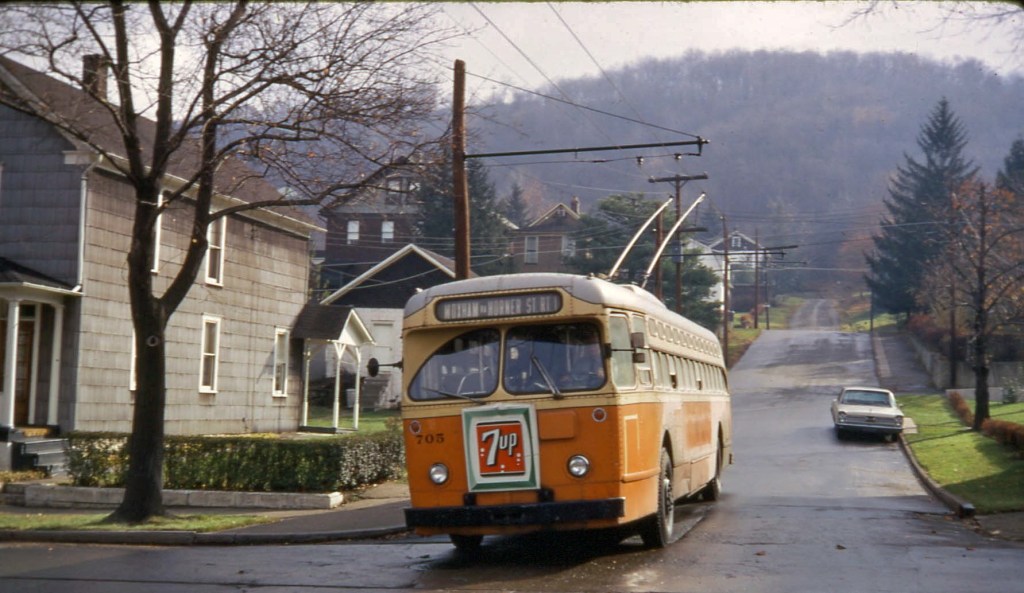
Quick aside on trolleybus history: Pittsburgh is actually somewhat unique in never having hosted trolleybuses. Many cities used trolleybuses as a sort of transition between streetcars and diesel buses, but Pittsburgh kept its streetcar network relatively late (into the 1960s) and went straight to diesel buses. However, nearby (but much smaller) western Pennsylvania city Johnstown did have a trolleybus network!(Ok, back to the point).
Trolleybus in Johnstown, PA, 1967.
Enter In-Motion Charging
In Europe, cities and bus manufacturers have been combining trolleybus and battery technology, to produce in-motion charging (IMC), described by transit writer and best practices expert Alon Levy in a really good post on their blog Pedestrian Observations (which was the inspiration for this post). As noted here, in-motion charging works best “when relatively small electrification projects can impact a large swath of bus routes. This, in turn, is most useful when one trunk splits into many branches.” Pittsburgh’s extremely radial, trunk-based bus network could be particularly well-suited to trolleybuses which use IMC: putting up wires on a few major corridors could bring pollution-free bus service to much of the city.
Trolleybuses For Pittsburgh
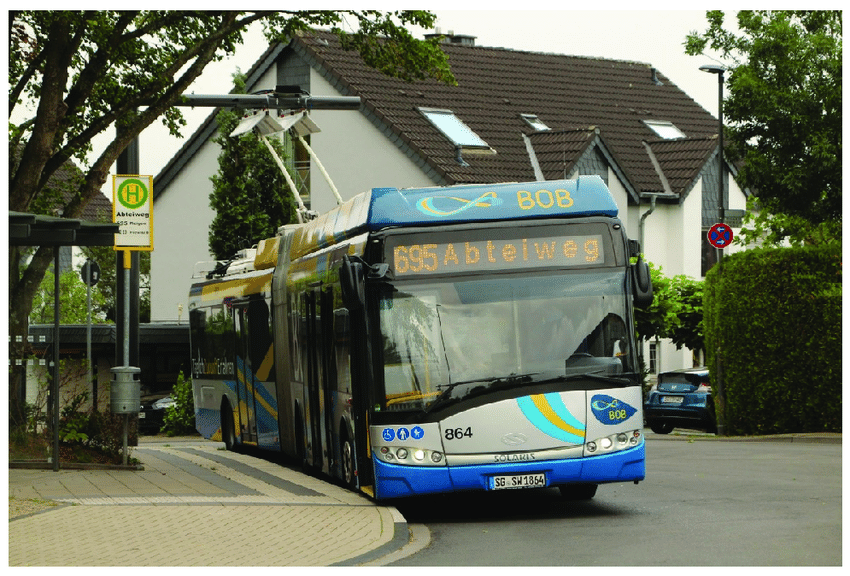
The most important variable in planning an IMC network is the off-wire range of the vehicles. Longer-range IMC buses on the road right now include Kiepe Electric’s buses in Solingen, Germany, with an off-wire range of 18 km (11 mi). Kiepe is supplying the electrical equipment for Dayton’s new trolleybuses, which have an off-wire range of 24 km (15 mi), according to Dayton’s Regional Transit Authority. For the purposes of this, the hypothetical Pittsburgh IMC bus has an off-wire range of 20 km, which seems optimistic against most IMC systems in operation (which average between 5-15 km off-wire), but is probably do-able given the range of more recent buses.
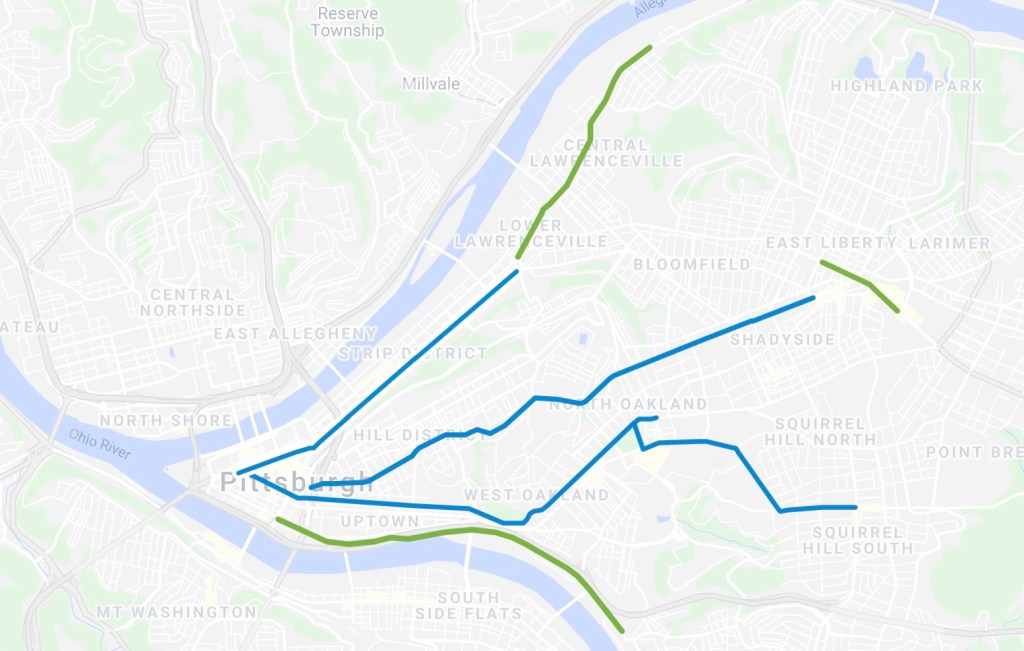
Prospective Pittsburgh trolleybus infrastructure map. Blue indicates first-priority corridors (explained below); green second-priority corridors. Map linked here.
So where should the city be stringing up trolley wires? Here are the four corridors that I think would be the strongest, and which, together, would bring all-electric bus service to a large swath of the city:
Fifth Avenue: Wiring Fifth Avenue between Downtown and Craig Street would be sufficient for the four main Fifth Avenue routes to complete their trips and return off-wire. (The 71A & B take two different routes to Highland Park, an approximately 10 km round-trip; the C & D go to Wilkinsburg, just over 14 km). The 71A and 71C could also pick up wires on Centre Avenue (see below) which would further shorten their off-wire segments.
Forbes Avenue: The Forbes Avenue routes branch further east, in Squirrel Hill, so wires should extend to Murray Avenue (also good because getting up said hill would be a not-insignificant battery drain). The 61D to the Waterfront mall—a 12.4 km round-trip—should be fine, and the 61B might just make it to Braddock and back (18.8 km), but the 61A and (especially) C are >20 km round-trips, so are difficult without opportunity chargers (more on this later) at their outer termini.
Liberty Avenue & Butler Street: Wiring the Liberty Avenue spine between Downtown and Lawrenceville, around 33rd Street, would provide enough power easily for the 88 (11 km) and maybe for the 86 (19.6 km, though this could have help along Centre Avenue) and 87 (18 km). You’d have to extend wires along Butler up to about 55th Street to bring the 91 just within round-trip range; this is a bit far, but might be worth it because this section is shared with the circumferential 93 and the 87 (which would bring that route within safe all-electric range).
Centre Avenue: Between Downtown and East Liberty, Centre Avenue hosts several bus routes, and contains some significant gradients in the Hill District, which make it ideal as a trolleybus corridor. Wiring Centre Avenue as far as Negley or Euclid would provide sufficient power for the 82, and shorter sections of power for many more routes: the 54, 71A/C, 81, 83, and 86 all have segments on Centre Avenue and, with wires on other sections of their routes, could be made fully-electric.
With the four corridors above, much of Pittsburgh’s East End would have fully-electric, pollution-free bus service. You may (rightly) point out that this proposed list is very East End-biased—this is really where the trunk/branch structure is strongest. In other areas of the city, the trunks are shorter and the branches longer, less desirable for IMC: this includes Carson Street in the West End and South Side, and North Avenue in the Central Northside.
There are other corridors that would work. Wiring Second Avenue as far as the Pittsburgh Technology Center could make the 57, 58, and (maybe) 56 fully-electric; Murray Avenue hosts frequent service and is hilly so may be worth it. Short but busy sections of route where buses’ boarding times are long, such as Penn Avenue in East Liberty, can also work for IMC.
The busways are the most glaring omission above—the reason they were left out above is because they are a real mixed bag of branch lengths, but enough branches could work with opportunity chargers at termini. If these were available, the busways would, of course, be very attractive routes for electrification—there are already several busway branches, such as the P17, P71, and G31, which are within the 20 km off-wire range. The other omission is the South Hills routes: these share a trunk (the Mount Washington Tunnel), but that is already wired for light rail, and trolleybus and light rail wires are not electrically compatible (trolleybuses need a separate return wire, rail vehicles do this through the running rails and therefore do not).
Opportunity Charging
Opportunitycharging refers to the ability of vehicles to recharge briefly while they sit in one place, either at certain bus stops or at a terminal. The required infrastructure is a short section of wire which buses can connect to while standing, as employed in Solingen, Germany, and being considered in Gdynia, Poland. Placing opportunity chargers at terminals effectively doubles the off-wire distance that vehicles can travel, as they would only need enough battery power to make it to the terminal, rather than to the terminal and back to the wires. Opportunity chargers would allow, for example, the 61A & B to run to their terminals in Braddock (11.8 and 9.4km from Squirrel Hill, respectively), and the 61C to its terminal in McKeesport (15.9km). This would also open up several East Busway branches—including the P67 (a 9.7 km branch), P7 (14.7 km), and P68 (19.7 km)—to IMC operation, as well as the remaining West Busway branches, the G3 (16.9 km), and (maybe) the 28X (22.2 km).
Surely—you may be thinking—battery-powered buses could do this just as easily? And if they can’t now, at the rate technology progresses, in a few years’ time they might—so won’t all these wires will have been wasteful? Nope! There are several key, fundamental advantages of trolleybuses over batteries.
IMC buses recharge their batteries while in service. This is a major difference with exclusively battery-powered vehicles, which need to stop and recharge with sufficient power to complete their next trip. This can take place at terminals, but only where terminal layovers are long enough to fully recharge; otherwise, battery buses have to be removed from service for some amount of time in order to recharge. The lack of ability for battery buses to recharge in service also means their batteries—a significant portion of the cost of an electric bus—need to be larger than those of an IMC vehicle. Battery-only vehicles are also less resilient: the range of battery-electric buses has been shown to suffer in cold weather and on steep hills—two things Pittsburgh is infamous for having in large amounts.
Most importantly, trolleybuses are extremely well-proven technology. Cities around the world have operated trolleybuses for over a century, and there are numerous long-standing precedents from which Pittsburgh (or any other city) can draw best practices on trolleybus operation. Philadelphia’s pilot of battery-electric buses has come to a halt, while its 98-year-old trolleybus network soldiers on. Dayton has operated trolleybuses since 1933 and, as mentioned above, has recently invested millions in its continued operation. And these are just the two examples nearest to Pittsburgh—looking internationally can provide further guidance on trolleybus operations, especially with the addition of in-motion and opportunity charging.
Re-Embracing The Trolleybus
If we want to develop or expand trolleybus and IMC networks, we have to encourage them. Right now, the Federal Transit Authority (FTA) subsidizes purchases of battery-electric (as well as fuel cell and hybrid) buses through its Low or No Emission Vehicle Program. But this program doesn’t cover the infrastructure costs of hanging new trolleybus wires. As “fixed guideway” projects, agencies building new trolleybus wires need to apply for FTA Capital Investment Grants instead, placing them in competition with rail transit projects. This should be changed. The Clean Transit For America Act, which increases funding to the Low or No Emission Vehicle Program, should change the guidelines of the program to include trolleybus/IMC vehicles, as well as the cost of wiring. This is an important policy change not only on the off-chance that a city like Pittsburgh decides to develop a new trolleybus network—but because the strategy for bus electrification in existing trolleybus cities should be extending wires, not scrapping them for batteries, as Boston seems worryingly to be considering.
IMC can create a “best of both worlds” electric bus, mitigating the logistical issues with battery-electric buses while keeping their off-wire flexibility—and electrifying a lot of bus service without the cost of wiring every bus route in their entirety. The point of this post was not to say that battery-electric technology is bad; after all, it is advancements in battery tech that allow IMC to work, and which will allow it to improve in the coming years. But electrification of buses is imperative for the climate and for public health. There’s no time to wait for battery technology to advance to the point where it is able to carry an entire city’s bus fleet, at reasonable cost and with acceptable reliability. If we want large-scale bus electrification soon, it is time to re-embrace the trolleybus.

 Liam O'Connell
